
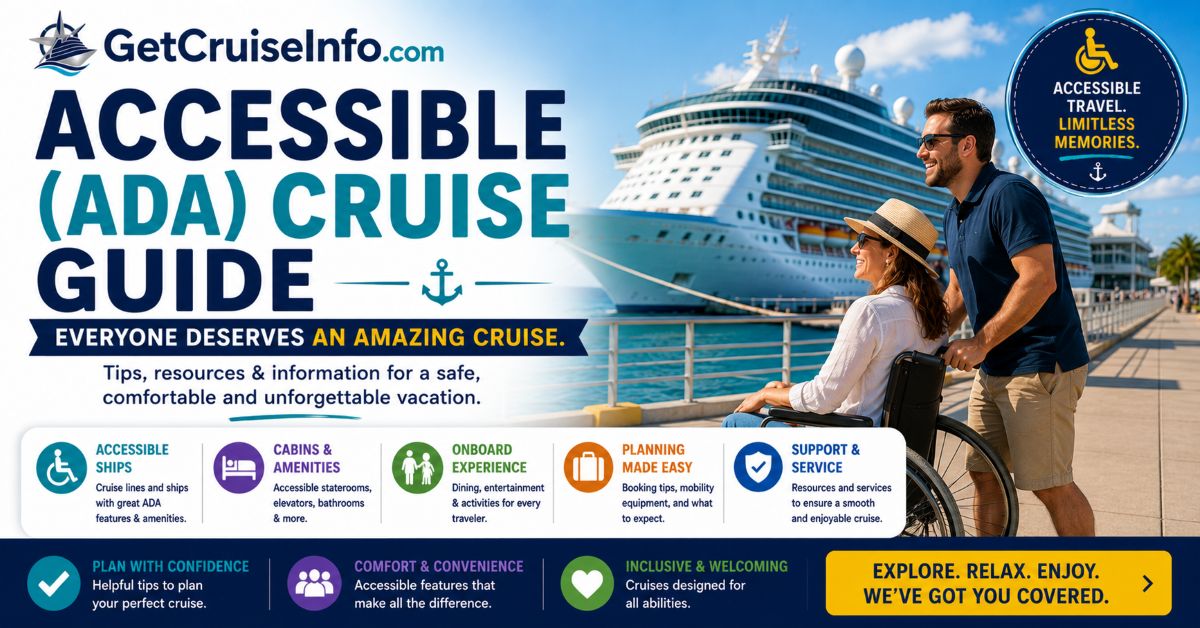
Accessible & ADA Cruise Guide: Wheelchair-Friendly Ships, Cabins & Cruise Planning
Learn how to plan an accessible cruise including ADA cabins, wheelchair-friendly ships, mobility planning, accessible excursions, medical accommodations, service animal policies, and cruise accessibility strategies.
Planning an Accessible Cruise?
GetCruiseInfo helps travelers compare cruise lines, accessible cabins, wheelchair-friendly itineraries, and onboard accessibility features.
We do not rent or provide mobility equipment.
We cannot supply wheelchairs, mobility scooters, patient lifts, Hoyer lifts, oxygen equipment, or other medical devices. However, we can help you choose a cruise that best accommodates your accessibility needs and explain what services the cruise line may be able to provide.
Can You Take an Accessible Cruise?
Yes. Modern cruise ships are among the most accessible travel options available, with major cruise lines offering ADA-compliant accommodations, mobility-friendly public spaces, accessible staterooms, and support services for travelers with medical, mobility, or sensory needs.
Accessibility quality varies significantly by:
- Cruise line
- Ship age
- Cabin location
- Itinerary type
- Port accessibility
Choosing the right ship and itinerary is often more important than simply selecting an accessible cabin. If accessible accommodations are one of several features you need, use our Cruise Ship Finder to select accessible cabins along with other preferences such as ship size, indoor pools, adults-only spaces, kids clubs, or onboard activities.
Travelers comparing cruise experiences may also find value in:
Accessible Cruise Cabins & ADA Features
Accessible cruise cabins are designed with wider layouts, mobility access, and additional support features compared to standard staterooms.
Common ADA cabin features include:
- Wider entry doors
- Roll-in showers
- Grab bars
- Lower closet rods
- Emergency assistance buttons
- Additional turning radius for wheelchairs
Not all accessible cabins are identical. Layout, bathroom usability, and maneuverability vary significantly by ship class and cruise line.
Travelers choosing cabins should also review:
- Cruise Ship Deck Plans
- Best Cabin Location Guide
- Cruise Ship Finder — identify ships with accessible cabins while also matching the onboard features you want
- Cruise Ship Comparison Tool — compare two shortlisted ships side by side
Accessible Cabins by Cruise Ship
The table below uses the GetCruiseInfo cruise ship database to show the number of cruise-line-designated accessible staterooms currently tracked for each ship. It is designed as a research starting point, not as a substitute for reviewing the specific accessibility features of an individual cabin before booking.
Accessible cabin count information is temporarily unavailable.
What the Accessible Cabin Count Means
Accessible cabin totals can include different accessibility classifications used by the cruise lines, such as fully accessible, single-side approach, and ambulatory-accessible staterooms. A higher cabin count does not mean that a ship is automatically more accessible for a particular traveler.
The right cabin depends on your individual needs, including doorway width, bathroom configuration, transfer space, bed access, mobility-device dimensions, cabin location, and other accessibility requirements. Always confirm the features of the exact stateroom before booking.
If you have not chosen a ship yet, start with the Cruise Ship Finder and select accessible cabins along with the other features that matter to you. If you are considering two specific ships, use the Cruise Ship Comparison Tool to compare their accessible cabin counts along with ship size, capacity, and onboard features side by side.
What Cruise Lines Often Don’t Clearly Explain About ADA Cabins
Accessible cruise cabins follow ADA guidelines, but real-world usability varies significantly between ships.
ADA Cabins Are Not Standardized
Door width, bathroom layouts, bed height, shower design, and overall maneuverability can vary substantially, even within the same cruise line fleet.
Cabin Location Matters More Than Many Travelers Expect
An accessible cabin located far from elevators, dining, or theaters may create daily mobility challenges. Proximity often impacts comfort more than cabin square footage alone.
Some Accessible Cabins Are “Ambulatory Accessible” Only
Some cabins include grab bars and modified bathrooms but are not fully wheelchair-usable. Understanding the distinction before booking is extremely important.
Accessible Cabins May Be Reassigned
Cruise lines may reassign accessible cabins if travelers without documented accessibility needs reserved them originally. This can create last-minute booking complications.
This guidance reflects real-world cruise cabin usability rather than marketing descriptions alone.
Wheelchair Accessibility Onboard Cruise Ships
Most newer cruise ships offer strong onboard accessibility features including:
- Wide hallways
- Elevator access across all public decks
- Accessible theater seating
- Pool lifts
- Accessible dining layouts
- Ramp-accessible lounges
Embarkation day can still be physically demanding, especially on larger ships.
Travelers should review:
Accessible Cruise Ports & Tender Port Challenges
Port accessibility varies dramatically depending on region, infrastructure, and whether the ship docks directly or uses tender boats.
Docked Ports
Large cruise ports often offer:
- ADA-compliant ramps
- Wide walkways
- Accessible transportation
- Accessible restrooms
Tender Ports
Tender ports can be significantly more challenging for wheelchair users and mobility-impaired travelers. Sea conditions, small boats, and uneven boarding surfaces may limit accessibility.
Travelers planning destination-focused itineraries should review the port details carefully. If your travel dates are fixed, you can also use Find a Cruise by Date to narrow the available sailings before evaluating the accessibility of each itinerary.
Accessible Shore Excursions
Many cruise lines offer mobility-friendly excursions, although accessibility quality still varies heavily by destination.
Accessible excursion options may include:
- Lift-equipped transportation
- Flat-surface city tours
- Scenic drives
- Accessible museums
- Beach wheelchairs
Travelers should always verify:
- Terrain difficulty
- Vehicle accessibility
- Walking distances
- Restroom availability
Medical Equipment & Accessibility Services
Do You Provide Wheelchairs or Mobility Equipment?
No. GetCruiseInfo is a cruise planning service, not a medical equipment provider. We do not rent or sell wheelchairs, mobility scooters, patient lifts, Hoyer lifts, walkers, oxygen equipment, or other medical devices.
If you require mobility equipment during your cruise, we can help you understand the accessibility options offered by the cruise line and what arrangements should be made before you sail.
Cruise lines can often accommodate medical equipment and accessibility needs when notified early enough before sailing.
Common accommodation requests include:
- Medication refrigeration
- Sharps containers
- Oxygen coordination
- Accessible seating
- Hearing assistance devices
- Sign language interpreters
Travelers managing food allergies should also review:
Service Animals on Cruise Ships
Most major cruise lines allow trained service animals, although documentation requirements vary significantly by itinerary and destination.
International itineraries may involve:
- Vaccination requirements
- Import permits
- Quarantine regulations
- Port-specific restrictions
Travelers should verify requirements well before departure.
Accessible Cruise Planning Tips
- Book accessible cabins early
- Research tender ports carefully
- Review deck plans before selecting cabins
- Notify the cruise line of medical needs early
- Bring backup mobility equipment chargers
- Keep medications in carry-on luggage
Travelers packing medical equipment should also review:
Estimate the Full Cost of an Accessible Cruise
Accessibility needs can affect more than cabin selection. Transportation, pre-cruise hotels, specialty transfers, equipment arrangements, shore excursions, and other trip components may change the overall vacation budget. Once you have identified a suitable ship and itinerary, use our Cruise Total Cost Calculator to estimate the broader cost of the trip rather than comparing cruise fares alone.
You can also estimate automatic onboard service charges with the Cruise Gratuity Calculator. If a beverage package is part of your planning, the Cruise Drink Package Calculator can help you compare package pricing with expected drink spending.
A practical sequence is to find ships that meet your needs, compare the strongest candidates, verify the exact accessible cabin and itinerary with the cruise line, and then calculate the likely total trip cost before booking.
Frequently Asked Questions
Do you rent wheelchairs, scooters, or patient lifts?
No. We do not provide or rent mobility equipment. Our role is helping travelers select accessible cruise ships, cabins, itineraries, and understand the accessibility accommodations available through the cruise line.
Are cruise ships ADA compliant?
Yes. Major cruise lines follow ADA accessibility guidelines, although accessibility quality varies by ship and itinerary.
Are accessible cruise cabins larger?
Yes. Accessible cabins typically provide additional maneuvering space, larger bathrooms, and mobility-friendly layouts.
Can wheelchair users participate in shore excursions?
Yes, although excursion accessibility varies heavily by destination, terrain, and transportation type.
Should travelers notify cruise lines about medical needs?
Absolutely. Early communication allows cruise lines to coordinate accommodations more effectively.
Are tender ports difficult for wheelchair users?
Yes. Tender ports can be challenging depending on sea conditions and boarding procedures.
Request Cruise Options
Get Cruise Info & Personalized Cruise Matches.Tell us when you want to travel, where you'd like to go, and what matters most to you. We'll help identify cruise options that fit your dates, budget, travel style, and cabin preferences. Not sure which cruise line, ship, or itinerary you want? That's completely fine — many travelers start with nothing more than available vacation dates, a departure port, or a general idea of where they'd like to go.
Only know your available dates? That's enough to get started. You can also review our Find a Cruise by Date Guide to see how we narrow cruise options around a fixed vacation window.