
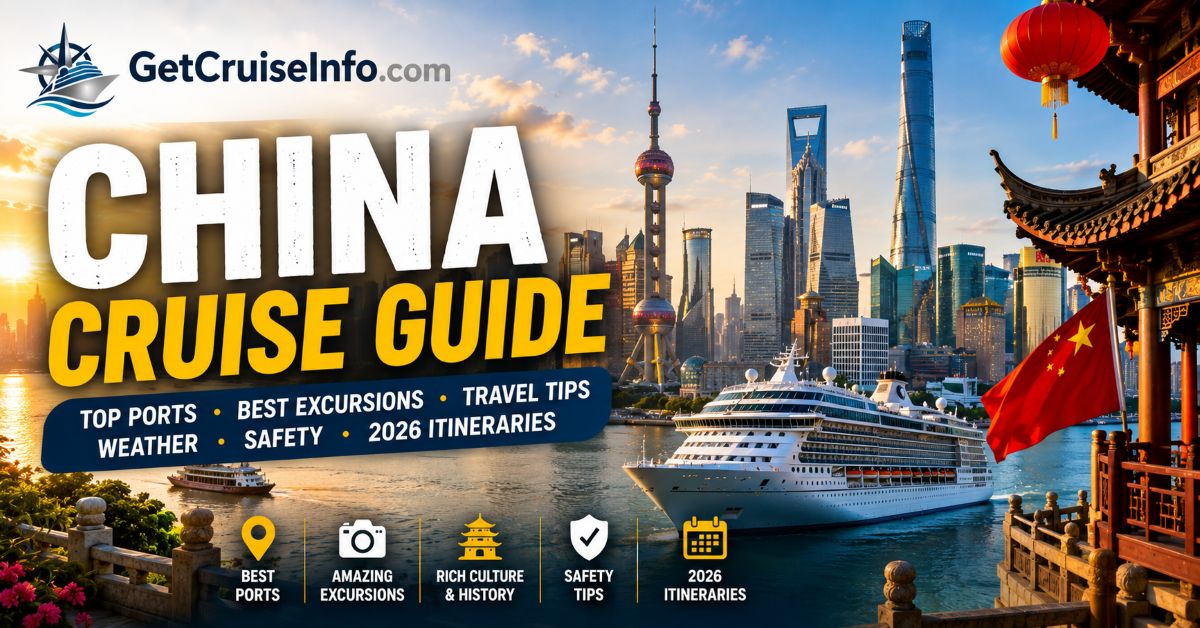
China Cruise Guide: Shanghai, Hong Kong, Excursions & Asia Cruise Planning
Learn how to plan a China cruise with advice on Shanghai, Hong Kong, Tianjin, weather, excursions, safety, visas, cruise ports, and Asia itinerary planning.
Why China Cruises Continue Growing in Popularity
China cruises combine modern megacities, ancient history, UNESCO landmarks, high-speed transportation systems, food culture, and gateway access to broader Asia itineraries.
For many travelers, China functions as both a destination and a launch point into larger Asia cruise experiences that may include Japan, South Korea, Singapore, Vietnam, or Thailand.
Cruisers comparing Asia itineraries should also review:
Shanghai Cruise Port Guide
Shanghai remains China’s most important cruise hub because of its international airport access, modern infrastructure, skyline, food scene, and transportation efficiency.
Many cruise travelers arrive several days early to explore:
- The Bund waterfront
- Yu Garden
- Shanghai Tower
- Nanjing Road shopping
- Historic French Concession districts
Shanghai also connects easily to other major cities using China’s extensive high-speed rail system.
Hong Kong Cruise Experiences
Hong Kong remains one of Asia’s strongest cruise embarkation cities because of its transportation systems, skyline, shopping, food culture, and international accessibility.
Popular experiences include:
- Victoria Peak
- Star Ferry rides
- Temple Street Night Market
- Dim sum dining experiences
- Hong Kong harbor cruises
Many itineraries departing Hong Kong continue toward Southeast Asia, Japan, or Singapore.
Beijing & Tianjin Cruise Planning
Tianjin functions as the primary cruise gateway for Beijing and northern China itineraries.
Cruise excursions often focus heavily on:
- The Great Wall
- Forbidden City
- Tiananmen Square
- Historic temples and palaces
- Traditional Chinese cultural experiences
These excursions are typically longer and more transportation-heavy than Caribbean-style port days, making organized planning especially important.
Travelers comparing excursion costs should also review our Cruise Excursions Budget Guide.
Best Time to Cruise China
- Spring (March–May): Comfortable weather and lighter crowds.
- Fall (September–November): Often considered the best overall season for sightseeing.
- Summer: Hotter, humid, and more crowded in many regions.
- Winter: Cooler weather with lower pricing opportunities on some itineraries.
Travelers comparing seasonal cruise pricing should also review our Cheapest Months to Cruise Guide.
Popular China Cruise Itineraries
China & Japan Cruises
One of the most common Asia cruise combinations, blending modern cities, food culture, temples, and historical landmarks.
China & South Korea Cruises
These itineraries frequently combine major urban experiences with markets, shopping, and cultural exploration.
China & Southeast Asia Cruises
Longer itineraries may include Vietnam, Singapore, Thailand, or the Philippines.
Grand Asia Voyages
Extended cruises may combine China, Japan, South Korea, Singapore, Vietnam, Malaysia, and Indonesia into one multi-week itinerary.
Cruisers interested in longer itineraries should also review our Cruise Sea Day Guide.
What to Pack for a China Cruise
Packing requirements vary significantly depending on season, itinerary length, and how much inland touring your itinerary includes.
Experienced Asia cruisers generally pack:
- Comfortable walking shoes
- Layered clothing
- Portable chargers
- Translation or map apps
- Rain protection
- Lightweight luggage for transfers
Travelers should also review:
China Cruise Safety & Travel Tips
China remains generally safe for cruise tourism, particularly within major cruise destinations and organized excursions.
Helpful travel strategies include:
- Download offline translation tools before arrival
- Prepare for cashless payment systems
- Use official transportation providers
- Check visa requirements early
- Carry cruise documents during port visits
Solo travelers should also review our Solo Cruise Guide.
China Cruises vs. Other Asia Cruise Regions
China cruises generally focus more heavily on urban exploration, history, architecture, transportation infrastructure, and cultural experiences compared to beach-focused Southeast Asia itineraries.
Travelers looking for tropical island experiences may prefer:
FAQ: China Cruise Guide
Do China cruises require visas?
Some itineraries do require visas depending on nationality, overnight stays, and specific ports visited.
Is China safe for cruise tourists?
Yes. Major cruise destinations such as Shanghai and Hong Kong remain generally safe for international travelers.
What cruise lines sail China itineraries?
Royal Caribbean, MSC Cruises, Costa Cruises, and selected regional cruise lines operate China sailings.
What is the best month to cruise China?
Spring and fall usually offer the best combination of weather, sightseeing conditions, and manageable crowds.
Are China cruises good for first-time Asia travelers?
Yes. Many travelers use China itineraries as an introduction to broader Asia cruise experiences.
Request Cruise Options
Get Cruise Info & Personalized Cruise Matches.Tell us when you want to travel, where you'd like to go, and what matters most to you. We'll help identify cruise options that fit your dates, budget, travel style, and cabin preferences. Not sure which cruise line, ship, or itinerary you want? That's completely fine — many travelers start with nothing more than available vacation dates, a departure port, or a general idea of where they'd like to go.
Only know your available dates? That's enough to get started. You can also review our Find a Cruise by Date Guide to see how we narrow cruise options around a fixed vacation window.