
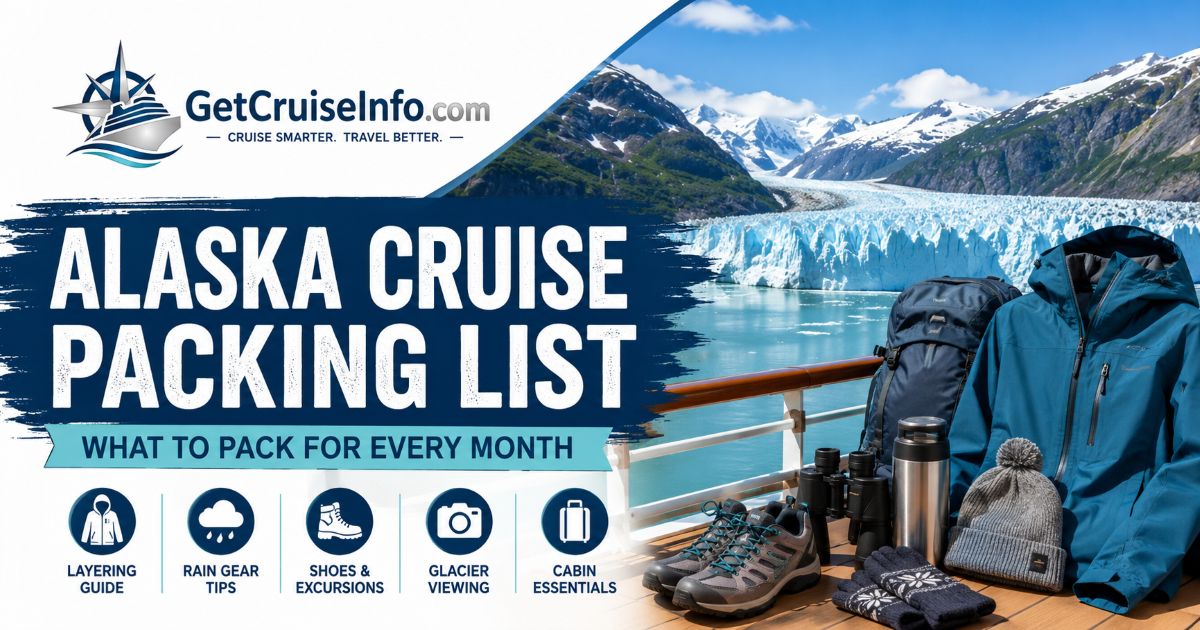
Alaska Cruise Packing List
A practical guide to the clothing, layers, rain gear, footwear, and everyday essentials that can help you stay comfortable during glacier viewing, port days, and Alaska shore excursions.
What Should You Pack for an Alaska Cruise?
An Alaska cruise requires a different packing strategy than a warm-weather sailing. You may encounter cool mornings, mild afternoons, wind, rain, and bright sunshine during the same day. The most useful clothing is therefore not necessarily the heaviest clothing. It is clothing that can be layered, removed, reused, and kept dry.
Most Alaska cruisers do not need to fill a suitcase with bulky winter coats. A practical combination of lightweight base layers, a fleece or similar insulating layer, a waterproof outer shell, comfortable shoes, and a few warm accessories will usually provide much more flexibility.
Your plans ashore also matter. A traveler riding the White Pass railway may pack differently than someone hiking near a glacier, taking a whale-watching boat, kayaking, or flying to a remote dog-sled camp. This guide separates everyday cruise clothing from excursion-specific gear so you can pack for the trip you are actually taking.
Start with our broader Cruise Packing List for documents, toiletries, evening clothing, medications, and general cruise preparation. This page focuses specifically on what changes when the destination is Alaska.
Practical rule: Pack for changing conditions rather than trying to predict one exact temperature. A waterproof shell worn over removable layers is usually more useful than one heavy coat.
Why Packing for Alaska Is Different
Much of an Alaska cruise is built around time outdoors. While Alaska is considered a mainstream cruise destination, travelers interested in smaller ships, remote landings, and immersive exploration may also want to learn how expedition cruises differ from traditional sailings. Travelers may spend hours watching glaciers from open decks, scanning the shoreline for wildlife, walking through port towns, or participating in excursions where shelter is limited. Even when the recorded temperature is mild, wind and moisture can make conditions feel considerably cooler.
At the same time, the ship itself will be climate controlled. Dining rooms, theaters, lounges, shops, and cabins are generally comfortable, which means a bulky coat that works outdoors may quickly become inconvenient inside. Layering lets you move between those environments without repeatedly changing your entire outfit.
Alaska's coastal communities also receive varying amounts of rain throughout the cruise season. Ketchikan is especially well known for wet weather, but showers can occur throughout Southeast Alaska. A dependable waterproof jacket and shoes that tolerate wet sidewalks are usually more valuable than carrying several heavy sweaters.
For help comparing the destination, ports, scenery, and itinerary choices, review our Alaska Cruise Guide and Alaska Cruise Planning Guide.
Alaska Cruise Weather and Packing by Month
The main Alaska cruise season generally runs from May through September. Conditions vary by region, elevation, and itinerary, so no monthly forecast can guarantee what you will experience. The month of travel does, however, help determine how heavily you should emphasize warmth, rain protection, and quick-drying clothing.
What to Pack for an Alaska Cruise in May
May sailings can feel crisp, especially in the morning, after sunset, and during glacier viewing. Snow may still be visible at lower elevations, while port afternoons can become pleasantly mild.
Prioritize a fleece or insulated mid-layer, waterproof shell, warm socks, lightweight gloves, and a knit cap. Bring short-sleeved shirts as base layers rather than assuming every day will require heavy clothing.
What to Pack for an Alaska Cruise in June
June brings long daylight hours and generally moderate daytime conditions, although wind and rain remain possible. Travelers often remove layers while walking in port and put them back on when returning to the ship or boarding a boat excursion.
Pack a balanced mix of short- and long-sleeved shirts, a lightweight fleece, waterproof jacket, comfortable walking shoes, sunglasses, and sun protection.
What to Pack for an Alaska Cruise in July
July is often one of the warmest periods of the Alaska cruise season, but that does not mean every day will feel warm. Open decks, glacier areas, rain, and fast-moving boats can still feel cold.
Include lighter shirts and possibly one pair of shorts, but do not leave behind your waterproof shell, fleece, gloves, or warm hat. The goal is flexibility rather than packing only for the warmest possible afternoon.
What to Pack for an Alaska Cruise in August
August can bring comfortable temperatures along with increasingly wet conditions later in the month. A sailing may include sunny afternoons, steady rain, cool scenic-cruising mornings, and windy excursion days.
Dependable rain protection, quick-drying layers, moisture-resistant footwear, and a small day bag become especially useful. Pack enough lightweight layers to adjust without relying on one oversized coat.
What to Pack for an Alaska Cruise in September
September usually brings cooler temperatures, shorter daylight hours, and a greater possibility of wet weather. It can also offer quieter ports and beautiful seasonal scenery.
Add another warm mid-layer, thicker socks, gloves, a knit cap, and a dependable waterproof outer layer. Travelers who become cold easily may also appreciate lightweight thermal base layers.
Timing affects more than clothing. Wildlife activity, cruise pricing, crowds, daylight, and itinerary availability also change throughout the season. Compare those factors in our Best Time to Cruise to Alaska Guide.
The Best Layering System for an Alaska Cruise
A simple three-layer system works for most Alaska cruise days. Each layer has a different purpose, and the layers can be combined or removed as weather and activity levels change.
- Base layer: A comfortable shirt worn closest to the skin. Short-sleeved shirts work well on milder days, while long-sleeved or lightweight thermal tops can provide added warmth in cooler months. Choose fabrics that remain comfortable if you perspire or encounter light moisture.
- Mid-layer: A fleece, sweater, lightweight insulated jacket, or similar garment that holds warmth. This is often the layer travelers remove while walking in port and put back on during scenic cruising or boat excursions.
- Outer layer: A waterproof and wind-resistant shell. This protects the layers underneath from rain and helps block cold wind on open decks, small boats, and exposed shorelines.
The layering system is more practical than relying on one large winter coat. It gives you multiple clothing combinations, takes up less space when packed carefully, and makes it easier to stay comfortable when moving between the ship and shore.
Useful Warm Accessories
Small accessories can make a surprisingly large difference without occupying much suitcase space. Consider packing:
- A lightweight knit cap that covers your ears
- Thin gloves or touchscreen-compatible gloves
- Warm, moisture-managing socks
- A scarf or neck gaiter for windy conditions
- Sunglasses for glare from water, snow, and ice
Avoid packing so many specialized cold-weather items that you have no room for ordinary onboard clothing. The same fleece, shell, gloves, and hat can usually be reused for glacier viewing, whale watching, early-morning port arrivals, and cooler evening walks.
Build Your Alaska List Around Your Itinerary
Before buying new clothing or travel gear, review your exact shore excursions and the equipment included by each operator. If you're comparing Alaska with more remote polar itineraries, our Arctic expedition cruise guide explains why additional cold-weather gear is often recommended. Some excursions provide specialized waterproof clothing, boots, helmets, or cold-weather gear. Others expect guests to arrive wearing suitable shoes and layers.
The descriptions and restrictions for hiking, kayaking, helicopter, dog-sledding, wildlife, and small-boat excursions should guide the final version of your list. Our Shore Excursions Guide explains what to consider before booking activities independently or through the cruise line.
General cruise accessories such as luggage tag holders, packing cubes, portable charging equipment, and cabin organizers are covered separately in our Cruise Essentials Guide. The next sections of this Alaska packing guide focus on destination-specific clothing, shoes, rain protection, excursion gear, and carry-on preparation.
Alaska Cruise Clothing Checklist
The best Alaska cruise wardrobe is built around versatile pieces that can be worn in different combinations. You do not need a separate outfit for every activity, but you should bring enough layers to adjust for wet, windy, cool, and occasionally mild conditions.
Short-Sleeved Shirts
Short-sleeved shirts work well as base layers and are useful during warmer afternoons, inside the ship, and during travel days. They can be worn alone or under a fleece and waterproof shell.
Long-Sleeved Shirts
Long-sleeved shirts provide extra warmth without adding much bulk. Pack several lightweight options rather than relying on thick sweaters that are difficult to layer.
Fleece or Lightweight Insulated Jacket
A fleece is one of the most useful pieces of clothing on an Alaska cruise. It can be worn under a waterproof shell during cold or windy conditions and used alone during mild port days or while walking around the ship.
Waterproof Outer Jacket
A waterproof and wind-resistant jacket should be considered one of the most important items on your list. Choose a jacket roomy enough to fit over a fleece or light insulated layer. A hood is especially useful because umbrellas can be awkward in wind and crowded ports.
Pants
Comfortable pants that allow easy movement are ideal for most Alaska port days. Jeans are perfectly acceptable for sightseeing, but they can become uncomfortable if they get soaked and may take a long time to dry. Quick-drying travel pants are a better choice for active or rain-prone excursions.
Shorts
One pair of shorts may be useful during a warm afternoon, for exercising onboard, or for time inside the ship. They should be treated as an optional item rather than the foundation of your Alaska wardrobe.
Warm Socks
Bring comfortable socks that work with your walking shoes or boots. Moisture-managing or wool-blend socks can help keep feet warmer and more comfortable during long excursion days. Pack enough pairs to replace wet socks when necessary.
Gloves and a Warm Hat
Lightweight gloves and a knit cap take up very little space and can make glacier viewing, whale watching, and early-morning scenic cruising much more comfortable. They are useful even during summer sailings.
Evening Clothing
Alaska cruises do not usually require a completely different evening wardrobe. Pack according to your cruise line's dining expectations, but a few smart-casual outfits are generally enough for dining rooms and evening entertainment.
Review our Cruise Dress Code Guide and Cruise Formal Night Guide before deciding how much dress clothing to bring.
Swimsuit
A swimsuit still belongs on an Alaska cruise packing list. Many ships have heated pools, hot tubs, thermal suites, and indoor spa facilities. Pack it in your carry-on if you may want to use those areas before your checked luggage reaches the cabin.
Sleepwear and Comfortable Cabin Clothing
Bring comfortable clothing for relaxing in your cabin or walking to casual dining venues. The ship will be heated, so heavy sleepwear is usually unnecessary unless you personally prefer it.
Do not overpack sweaters. One or two reliable mid-layers are usually more useful than several bulky sweaters, especially when combined with a waterproof outer shell.
What Shoes Should You Pack for an Alaska Cruise?
Most Alaska cruisers need fewer shoes than they expect. The right combination depends on your excursions, but comfort, traction, and moisture resistance matter more than appearance during port days.
Comfortable Walking Shoes
A supportive pair of walking shoes is enough for many travelers visiting towns, museums, scenic overlooks, shops, and paved attractions. Choose shoes you have already worn for several hours without discomfort.
Water-Resistant or Waterproof Shoes
Water-resistant walking shoes or trail shoes are useful in rainy ports, on damp docks, and during excursions involving uneven ground. For many cruisers, lightweight waterproof trail shoes are more practical than heavy hiking boots.
Hiking Boots
Full hiking boots are appropriate when your itinerary includes longer hikes, muddy trails, steep terrain, or excursions that specifically recommend them. They are often unnecessary for travelers whose plans are limited to sightseeing, rail tours, and casual walking.
Dress Shoes
One pair of simple dress shoes or polished casual shoes is usually enough for evening dining. Avoid packing multiple formal pairs unless your cruise line or personal plans truly require them.
Sandals or Flip-Flops
Sandals or flip-flops are useful for pools, hot tubs, spa areas, and quick trips around the cabin. They are not a substitute for supportive shoes during most Alaska port days.
What Most Cruisers Can Skip
- Heavy snow boots
- Multiple pairs of dress shoes
- Brand-new hiking boots that have not been broken in
- Open-toed shoes for active excursions
Check every excursion description before finalizing your footwear. Some operators have closed-toe shoe requirements, while others may provide specialized boots or waterproof gear.
Rain Gear for an Alaska Cruise
Rain is part of the Alaska cruise experience, especially in Southeast Alaska. You do not need expedition-level equipment, but staying dry can make the difference between enjoying a port day and returning to the ship early.
Waterproof Jacket with a Hood
A hooded waterproof jacket is more dependable than a water-resistant fashion jacket. Look for enough room underneath to wear a fleece or light insulated layer. A longer cut may provide additional protection in wind-driven rain.
Waterproof Pants
Waterproof over-pants are optional for ordinary sightseeing but can be valuable for kayaking, hiking, wildlife tours, and excursions expected to continue during steady rain. Lightweight versions can be carried in a day bag and pulled over regular pants when needed.
Waterproof Phone Protection
Rain, spray, and wet excursion equipment can damage electronics. A waterproof phone pouch can help protect your phone during rainy port days, kayaking, small-boat excursions, and waterfront activities. Test the seal before relying on it and follow the manufacturer's depth and usage limits.
Dry Bag or Water-Resistant Day Bag
A compact dry bag or water-resistant backpack can protect a camera, extra layers, medications, documents, and electronics. For ordinary sightseeing, a lightweight day bag with a rain cover may be sufficient.
Umbrella
A compact umbrella can be useful during light rain in town, but it is often less practical in strong wind, on crowded sidewalks, and during active excursions. A hooded jacket keeps your hands free and generally works better in changing Alaska conditions.
Quick-Drying Clothing
Quick-drying shirts, pants, and socks are helpful even when you are wearing a waterproof shell. Rain can enter around sleeves and collars, and wet clothing may also result from boat spray or perspiration during active excursions.
Avoid packing mistakes that add bulk without improving comfort by reviewing our Cruise Packing Mistakes Guide.
What to Pack for Glacier Viewing
Glacier viewing is one of the highlights of an Alaska cruise. Even when the ship is sailing during summer, the conditions are generally far milder than those encountered on Antarctica expedition cruises, where travelers should prepare for much colder weather and more demanding expedition activities. the combination of open water, wind, shade, and ice can make outdoor decks feel much colder than nearby ports.
Glacier Viewing Clothing
- Long-sleeved base layer
- Fleece or lightweight insulated mid-layer
- Waterproof and wind-resistant outer jacket
- Warm socks
- Lightweight gloves
- Knit cap or ear-covering hat
- Comfortable shoes with good traction
Binoculars
Binoculars can help you examine glacier details, spot wildlife along the shoreline, and enjoy scenery that may be difficult to appreciate with the naked eye. A compact pair is easier to carry throughout the trip.
Camera and Extra Storage
Bring a camera or phone with enough available storage for scenic cruising. Glacier days can produce hundreds of photos and videos, especially when wildlife or calving activity occurs.
Portable Charger
Cold conditions, video recording, navigation, and frequent photography can drain a phone battery quickly. A fully charged portable battery provides backup power when you are away from your cabin or spending hours on deck. Keep lithium batteries in carry-on luggage and follow current transportation rules.
Sunglasses
Sunlight reflecting from water, snow, and ice can create significant glare. Sunglasses are useful even on cool days and should remain in your day bag.
Balcony Comfort
Travelers with balconies may want to keep a warm layer, gloves, binoculars, and a camera near the cabin door so they can step outside quickly when scenery or wildlife appears. Do not leave loose items unattended on the balcony.
What to Pack for Popular Alaska Shore Excursions
Excursion requirements vary considerably. Always follow the operator's instructions, especially when specialized equipment, weight restrictions, mobility requirements, or closed-toe shoes are involved.
Whale-Watching Excursions
- Waterproof and wind-resistant jacket
- Fleece or warm mid-layer
- Gloves and knit cap
- Binoculars
- Camera or phone with extra battery power
- Motion sickness medication if appropriate for you
Small whale-watching boats can feel much colder than the dock, particularly when traveling at speed. Review our Cruise Motion Sickness Guide if you are concerned about boat movement.
White Pass and Scenic Railway Excursions
- Comfortable layered clothing
- Light jacket or waterproof shell
- Camera or phone
- Portable charger
- Passport or other documents if required by the specific itinerary
Rail excursions are generally less physically demanding, but temperatures may differ between the port and higher elevations. Keep an extra layer accessible rather than packed beneath other items.
Mendenhall Glacier and Glacier Visitor Areas
- Layered clothing
- Waterproof jacket
- Comfortable shoes with traction
- Water-resistant day bag
- Binoculars and camera
Walking surfaces may be wet, and travelers choosing longer trails should bring footwear appropriate for uneven ground.
Helicopter and Flightseeing Tours
- Close-fitting layers without loose straps or accessories
- Closed-toe shoes
- Sunglasses
- Camera secured according to operator instructions
- Required identification
Operators may limit bags, loose items, and equipment for safety and weight reasons. Follow the excursion instructions rather than assuming your normal day bag will be allowed.
Dog-Sledding Excursions
- Warm base and mid-layers
- Waterproof outer shell
- Gloves and warm hat
- Sunglasses
- Closed-toe shoes or provided glacier footwear
Some glacier dog-sledding operators provide boots or other specialized equipment. Read the instructions carefully so you do not buy or pack unnecessary gear.
Kayaking Excursions
- Quick-drying base layers
- Warm layer that fits beneath provided gear
- Waterproof phone pouch
- Secure sunglasses strap if permitted
- Extra socks
Many operators provide paddling jackets, personal flotation devices, and other equipment. Avoid cotton clothing when extended exposure to water is possible.
Hiking Excursions
- Supportive trail shoes or hiking boots
- Quick-drying pants and shirt
- Waterproof shell
- Water bottle
- Small first-aid supplies
- Insect repellent when conditions warrant it
Do not bring bear spray aboard the cruise ship. Cruise lines restrict hazardous and pressurized items, and organized excursions operating in wildlife areas should explain their own safety procedures. Review our What Not to Pack for a Cruise Guide before departure.
Useful Cabin and Travel Essentials for Alaska
The Alaska-specific items in this guide should be combined with a small number of practical cruise accessories. The goal is not to buy every popular cruise gadget, but to choose items that solve a real packing, charging, or organization problem.
Packing Cubes
Packing cubes can separate base layers, warm accessories, evening clothing, and excursion gear. They also make it easier to find a hat, gloves, or dry socks without emptying the entire suitcase.
Magnetic Hooks
Many cruise cabin walls contain metal. Strong magnetic hooks can provide convenient hanging space for lightweight jackets, hats, day bags, and lanyards. Do not overload hooks or place items where they create a trip hazard.
USB Charging Hub
Phones, cameras, watches, and portable batteries can create more charging demand than older cruise cabins can easily handle. A compact USB charging hub can help organize permitted charging equipment. Avoid surge-protected power strips unless the cruise line specifically allows them.
Cruise Luggage Tag Holders
Printed luggage tags may be exposed to rain during airport transfers and embarkation. Reusable cruise luggage tag holders can help prevent paper tags from tearing, becoming wet, or detaching. Confirm compatibility with your cruise line before ordering.
Reusable Water Bottle
A reusable water bottle is useful during long port days, scenic rail trips, and active excursions. Follow refill-station rules and confirm whether the excursion permits outside containers.
See our complete Cruise Essentials Guide for additional cabin accessories, charging solutions, luggage gear, and embarkation-day items.
Shop Our Alaska Cruise Gear Picks
If you still need gear for your Alaska cruise, our Amazon Store brings together practical cruise accessories, packing gear, cabin organization products, travel electronics, rain-day essentials, and other items that can make preparing for the trip easier.
Disclosure: Some links on this page may be affiliate links. If you make a purchase through them, GetCruiseInfo may earn a commission at no additional cost to you. We only recommend products and services we believe may provide genuine value to cruise travelers.
What to Pack in Your Carry-On Bag
Your checked luggage may not arrive at your cabin for several hours. Keep anything you cannot comfortably live without in your carry-on.
- Passport or accepted identification
- Cruise documents
- Prescription medications
- Phone, charger, and portable battery
- One warm layer and waterproof jacket
- Swimsuit if you plan to use the pools or hot tubs
- Valuables and electronics
Our Cruise Carry-On Packing List goes into greater detail.
Electronics Worth Bringing
- Phone
- Camera
- Extra memory cards
- Charging cables
- Portable charger
- Binoculars
Health and Toiletries
Bring medications in their original containers and pack enough for delays. Lip balm, moisturizer, sunscreen, pain relievers, motion sickness remedies, and a small first-aid kit are all worthwhile additions.
For more advice, visit our Cruise Health & Comfort Guide and Cruise Motion Sickness Guide.
What Not to Pack for an Alaska Cruise
- Heavy winter parkas
- Multiple bulky sweaters
- Snow boots unless specifically required
- Bear spray
- Large umbrellas
- Too many formal outfits
See our What Not to Pack for a Cruise guide for additional prohibited and unnecessary items.
Printable Alaska Cruise Packing Checklist
- □ Base layers
- □ Fleece or insulated layer
- □ Waterproof shell
- □ Walking shoes
- □ Warm socks
- □ Gloves and knit hat
- □ Waterproof phone pouch
- □ Portable charger
- □ Binoculars
- □ Camera
- □ Travel documents
- □ Prescription medications
Frequently Asked Questions
Do I need waterproof boots?
Most travelers do well with waterproof walking or trail shoes. Full hiking boots are usually only needed for demanding excursions.
Should I pack shorts?
One pair is sufficient for most travelers. They are useful onboard and on occasional warm afternoons.
Will I need gloves?
Yes. Lightweight gloves are surprisingly useful for glacier viewing and whale-watching trips.
Do I need a heavy winter coat?
No. Layering with a fleece and waterproof shell is usually more practical than a bulky parka.
Should I bring binoculars?
Yes. They greatly improve wildlife and glacier viewing.
Can I do laundry onboard?
Many cruise ships offer self-service or paid laundry, depending on the cruise line and ship.
Final Thoughts
Alaska rewards travelers who pack thoughtfully instead of packing heavily. Focus on layers, waterproof protection, comfortable footwear, and practical accessories. You'll stay comfortable whether you're watching glaciers from the deck or exploring Alaska's ports.
Planning Your Cruise Vacation?
Compare itineraries, cabin options, cruise lines, and pricing before booking.