
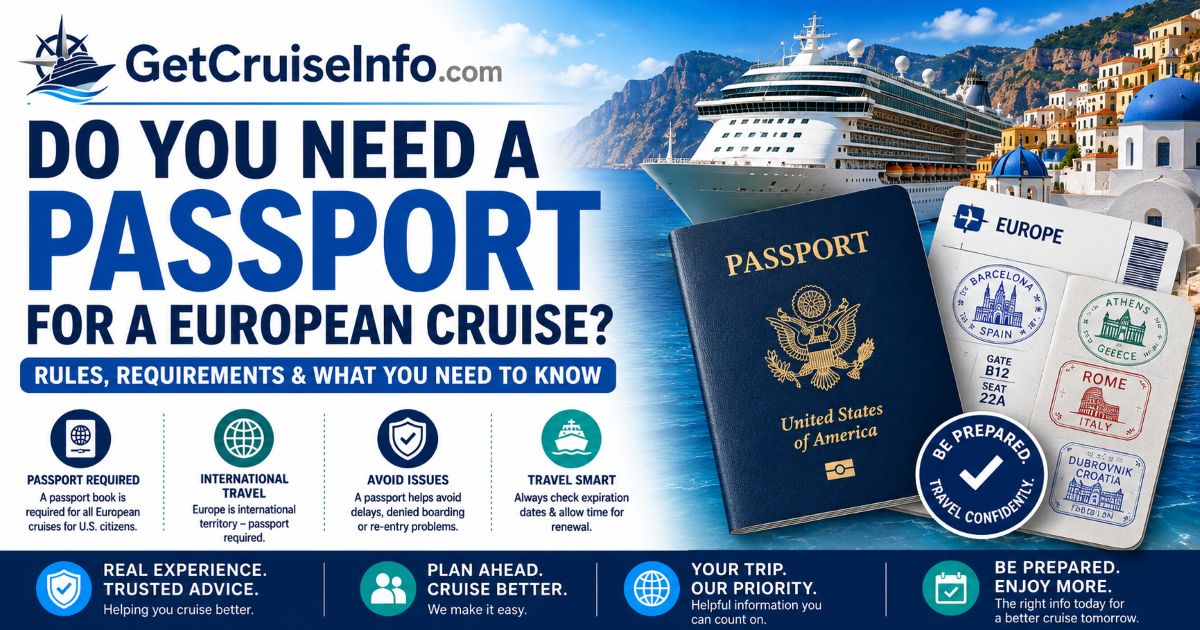
Do You Need a Passport for a European Cruise?
Yes — you absolutely need a valid passport for a European cruise.
Unlike some Caribbean sailings, there are no closed-loop exceptions for Europe. European cruises involve international travel between multiple countries, and cruise lines strictly enforce passport requirements before boarding.
Quick Answer: European cruises require a valid passport, and many countries recommend at least six months of validity beyond your return date.
If you are comparing documentation rules across destinations, review our full guide to Cruise Passport Requirements.
Why European Cruises Always Require Passports
European itineraries involve international travel through countries with their own immigration requirements and border controls.
- Mediterranean cruises require passports
- Northern Europe cruises require passports
- Baltic cruises require passports
- Transatlantic cruises require passports
Even if your cruise begins and ends in the same country, international travel rules still apply once you enter foreign ports.
Passport Validity Rules for Europe
Many travelers focus only on whether they have a passport while overlooking expiration requirements.
Many European destinations recommend:
In addition to checking your passport's expiration date, some travelers should also verify that it complies with the 10-year passport rule. For certain European destinations, the date your passport was issued can be just as important as its expiration date. A passport that appears valid may still be rejected if it was issued more than 10 years before your arrival.
- At least 6 months of passport validity beyond travel dates
- At least 2 blank passport pages
- Matching legal names across all travel documents
Passengers with passports close to expiration may face:
- Denied boarding
- Immigration issues
- Flight complications
- Problems re-entering the United States
Do Mediterranean Cruises Require Passports?
Yes. Mediterranean cruises always require passports.
Popular Mediterranean itineraries often include:
- Italy
- Spain
- France
- Greece
- Croatia
Because these cruises involve multiple international ports, cruise lines require valid passports for all passengers regardless of age.
If you are planning a Mediterranean sailing, review our Mediterranean Cruise Guide.
What Happens If You Don’t Have a Passport?
If you arrive for a European cruise without a valid passport, you will be denied boarding.
Cruise lines do not make exceptions for:
- Birth certificates
- Driver licenses
- Expired passports
- Pending passport renewals
Additionally, without a valid passport:
- You cannot board international flights
- You cannot legally enter most European countries
- You may be unable to rejoin your cruise if delayed at a port
Do Children Need Passports for European Cruises?
Yes. Every passenger—including infants and children—must have a valid passport for a European cruise.
This differs from certain Caribbean closed-loop cruises where alternative documentation may occasionally be accepted.
For comparison, review our Closed-Loop Cruise Passport Rules Guide.
Special Considerations for Non-U.S. Citizens and Permanent Residents
Over the years, I've received questions involving expired green cards, pending immigration petitions, dual citizenship, and visa requirements for international cruises.
European cruises often visit multiple countries, each with its own entry requirements. Documentation requirements may vary based on citizenship, residency status, and itinerary.
Travelers who are not U.S. citizens may need additional visas, residency documentation, or other supporting travel documents depending on their citizenship and itinerary.
Because immigration requirements frequently change and individual circumstances vary, GetCruiseInfo does not provide visa or immigration advice for non-U.S. citizens.
Travelers should verify documentation requirements directly with their cruise line and consult a visa specialist such as VisaHQ before booking international travel.
My Recommendation Before Booking Europe
Personally, I would never wait until the last minute to verify passport validity for an international cruise.
European itineraries are expensive trips with flights, hotels, transfers, and multiple countries involved. A passport issue can quickly turn into a very expensive problem.
Before booking:
- Check your passport expiration date immediately
- Verify names match airline and cruise reservations
- Renew early if your passport is close to expiration
- Allow extra processing time before travel season
Final Thoughts
European cruises offer incredible travel experiences, but they also come with stricter documentation requirements than many travelers are used to.
For Europe, a passport is not optional—it is essential.
The safest approach is simple: verify your documents early and avoid unnecessary stress before your trip.
Frequently Asked Questions
Do you need a passport for a Mediterranean cruise?
Yes. All Mediterranean cruises require valid passports for every passenger.
How long does your passport need to be valid?
Many European destinations recommend at least six months of validity beyond your return date.
Can you cruise Europe with a birth certificate?
No. European cruises require passports and do not allow birth certificate-only travel.
Do children need passports for European cruises?
Yes. Every passenger regardless of age must carry a valid passport.
Can you board a European cruise with an expired passport?
No. Expired passports are not accepted for international cruise travel.
What if I am not a U.S. citizen?
Documentation requirements for European cruises vary based on citizenship, residency status, and itinerary. Travelers should verify requirements directly with their cruise line and consult a visa specialist before travel.