
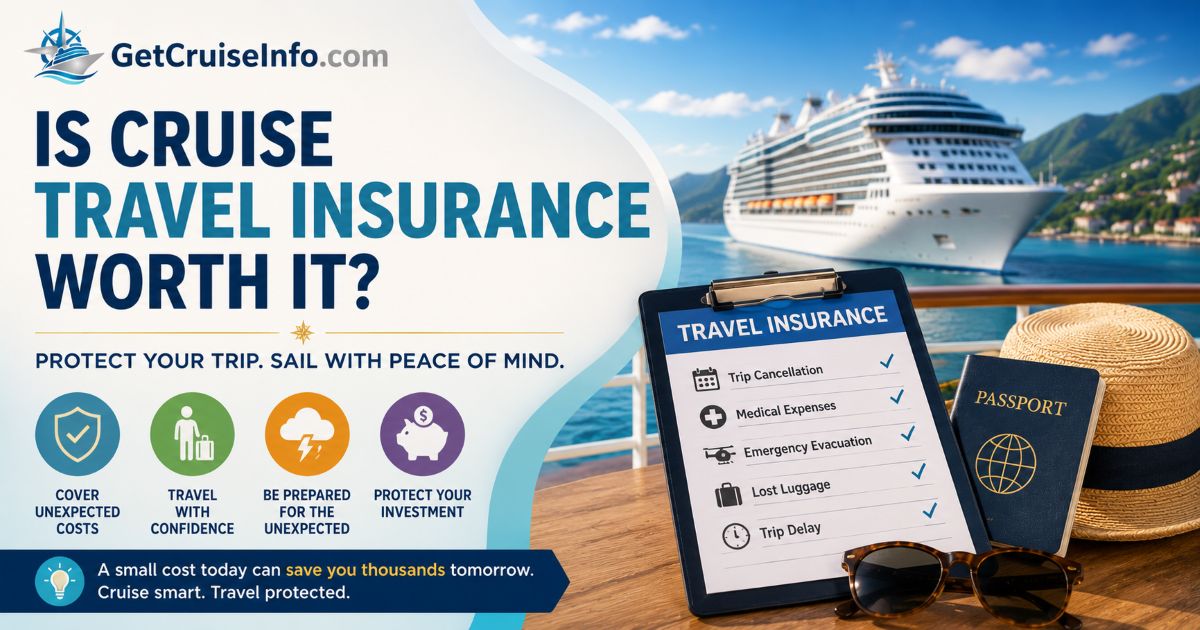
Is Cruise Travel Insurance Worth It?
Cruise travel insurance can protect you from missed departures, medical emergencies, cancellations, and expensive disruptions — but it’s not always necessary. Here’s how to decide.
Is Cruise Travel Insurance Worth It?
Cruise travel insurance is one of the most debated add-ons during the booking process. Some travelers view it as unnecessary, while others rely on it to protect thousands of dollars in travel expenses.
The real question is not simply whether insurance is “worth it.” The real question is:
Can you comfortably absorb the financial consequences if something goes wrong?
Cruise vacations involve multiple moving parts:
- Flights
- Hotels
- Port transportation
- Medical risk
- Weather disruptions
- International travel complications
Travel insurance exists to offset those risks.
What Cruise Travel Insurance Usually Covers
Coverage varies between providers, but most cruise travel insurance policies include:
- Trip cancellation protection
- Trip interruption coverage
- Emergency medical treatment
- Medical evacuation coverage
- Travel delays and missed connections
- Lost or delayed luggage
These protections directly apply to many of the most expensive cruise-related problems travelers face.
If you want to understand what actually happens when those problems occur, our Cruise Problems Guide covers missed departures, flight delays, illness, cancellations, lost luggage, documentation problems, missed ports, late excursions, and other situations that can disrupt a cruise.
Scenario 1: You Miss Your Cruise Ship
Missing embarkation is one of the most expensive cruise travel mistakes.
If a flight delay or transportation problem causes you to miss the ship, insurance may help cover:
- Transportation to the next port
- Hotels and meals
- Rebooking costs
- Emergency transportation changes
Without insurance, you are typically responsible for all replacement expenses yourself.
From My Experience
I recently worked with clients who declined travel insurance and chose to fly to their cruise departure city on the same day the ship was scheduled to leave. An airline problem caused them to miss their connection, and they never made it to the ship.
The result was thousands of dollars in lost vacation costs. Depending on the specific policy and circumstances, travel insurance with appropriate missed-connection or travel-delay coverage may have protected some of that loss.
What makes situations like this especially frustrating is the comparison in cost. Protection for a trip worth thousands of dollars can sometimes cost roughly what travelers will spend on a handful of drinks during the vacation. You hope you never need the insurance, but when something goes wrong before you even reach the ship, the financial consequences can be enormous.
— Brian Rooney
Travel Advisor & Founder, GetCruiseInfo.com
For a detailed breakdown, review:
Scenario 2: You Get Sick During the Cruise
Many travelers underestimate how expensive onboard medical treatment can become.
- Doctor visits
- Medication
- Emergency treatment
- Hospital transportation
- Medical evacuation
Medical evacuations from cruise ships can cost tens of thousands of dollars depending on location and severity.
For more details, review:
What Happens If You Get Sick on a Cruise?
Don't Leave the Ship Without Your Medical Records
If you receive medical treatment onboard, don't assume you'll automatically receive the documentation your travel insurance company may later request.
- Request an itemized bill before leaving the ship.
- Ask for a treatment summary or physician's notes.
- Save receipts for prescriptions and other medical expenses.
- Keep copies of any discharge paperwork or referrals.
From My Experience
I've worked with clients who received medical treatment onboard but left the ship without copies of their medical records or itemized billing. When they later filed a travel insurance claim, the insurance company requested those documents, and obtaining them after the cruise added unnecessary delays. Whenever possible, I recommend requesting copies of your treatment records and billing before you disembark.
— Brian Rooney
Founder, GetCruiseInfo.com
Scenario 3: You Need To Cancel the Trip
Unexpected problems before departure can easily force travelers to cancel:
- Illness or injury
- Family emergencies
- Severe weather disruptions
- Employment issues
- Travel interruptions
Cruise insurance may reimburse prepaid non-refundable costs depending on the policy.
A cancellation can also affect people who still intend to travel. For example, if two people share a cabin and one person has to cancel, the remaining passenger may face a change in cabin pricing, promotions, or other booking terms. Our What Happens If One Person Cancels a Cruise? guide explains what to check before removing one traveler from a reservation.
From My Experience
As a travel advisor, one of the hardest conversations I have is with clients who have to cancel a cruise because of an unexpected illness, injury, or family emergency after declining travel insurance. It happens more often than most people realize, and many are surprised to learn how much of their vacation cost may be non-refundable. Every situation is different, but I've seen enough of these cases to encourage travelers to seriously consider whether they're comfortable taking that financial risk.
— Brian Rooney
Founder, GetCruiseInfo.com
What Cruise Insurance Usually Does NOT Cover
Many travelers misunderstand policy exclusions.
- Changing your mind about the trip
- Missing the ship due to poor planning
- Known weather events before purchase
- Some pre-existing medical conditions
- High-risk activities depending on policy terms
Understanding exclusions is just as important as understanding coverage.
How Much Does Cruise Travel Insurance Cost?
Most cruise insurance policies cost approximately:
- 5%–10% of total trip cost
For example:
- $3,000 cruise = approximately $150–$300 insurance cost
- $6,000 international cruise = approximately $300–$600 insurance cost
Compared to emergency medical evacuation or missed departure costs, insurance can represent relatively inexpensive protection.
When Cruise Insurance Is Usually Worth It
- You are flying to the departure port
- Your cruise is international
- You have significant prepaid expenses
- You have medical concerns
- You want financial protection against disruptions
When Some Travelers Skip Cruise Insurance
- You are driving to the port
- You can comfortably absorb the financial loss
- You already have strong travel coverage through credit cards
- You have existing medical evacuation coverage
Some premium travel credit cards already include portions of travel protection.
How To Choose the Right Cruise Insurance Policy
- Compare medical coverage limits carefully
- Review evacuation coverage maximums
- Check for pre-existing condition waivers
- Review cancellation definitions closely
- Understand what documentation you'll need if you ever have to file a claim.
- Understand claim filing requirements
Travelers planning major international cruises should begin evaluating insurance options early in the planning process.
For broader preparation guidance, review our Cruise Planning Guide.
Popular Cruise Travel Insurance Providers
Many travelers compare multiple providers before purchasing cruise travel insurance. Coverage limits, medical evacuation benefits, cancellation protections, and pre-existing condition waivers can vary significantly between policies.
- Allianz Travel Insurance – Offers trip cancellation, medical, and travel delay coverage for many types of vacations.
- Travel Guard – Provides customizable travel insurance plans with varying coverage levels.
- Seven Corners – Known for international travel and medical coverage options.
- InsureMyTrip – Allows travelers to compare policies from multiple insurance companies.
Travelers should carefully compare policy details, exclusions, and coverage limits before purchasing any insurance product. GetCruiseInfo.com does not endorse any specific provider, and travelers should evaluate policies based on their individual needs.
Bottom Line: Cruise Insurance Is About Risk Tolerance
Cruise travel insurance is not mandatory, but it can protect travelers from situations that create extremely expensive problems very quickly.
For many travelers, insurance is less about fear and more about protecting a major travel investment.
If losing the cost of the cruise, paying emergency medical expenses, or missing the ship would create serious financial stress, insurance is usually worth considering.
Still Deciding Whether a Cruise Is Worth the Cost?
Travel insurance is only one part of the overall value equation. If you're still weighing whether a cruise offers good value compared to other types of vacations, our in-depth guide examines cruise pricing, what's included, hidden costs, and the types of travelers who get the most value from cruising.
Frequently Asked Questions
Is cruise travel insurance required?
No. Cruise travel insurance is not legally required, but many travelers purchase it for financial and medical protection.
How much does cruise insurance usually cost?
Most policies cost between 5% and 10% of the total trip cost.
Does cruise insurance cover missing the ship?
It may cover missed departures caused by covered transportation delays, but not poor planning or arriving late intentionally.
Does cruise insurance cover medical emergencies?
Yes. Most policies include some level of onboard medical treatment and evacuation coverage.
Is cruise insurance worth it for Caribbean cruises?
For many travelers flying to ports or booking expensive itineraries, cruise insurance provides valuable financial protection.
Request Cruise Options
Get Cruise Info & Personalized Cruise Matches.Tell us when you want to travel, where you'd like to go, and what matters most to you. We'll help identify cruise options that fit your dates, budget, travel style, and cabin preferences. Not sure which cruise line, ship, or itinerary you want? That's completely fine — many travelers start with nothing more than available vacation dates, a departure port, or a general idea of where they'd like to go.
Only know your available dates? That's enough to get started. You can also review our Find a Cruise by Date Guide to see how we narrow cruise options around a fixed vacation window.