
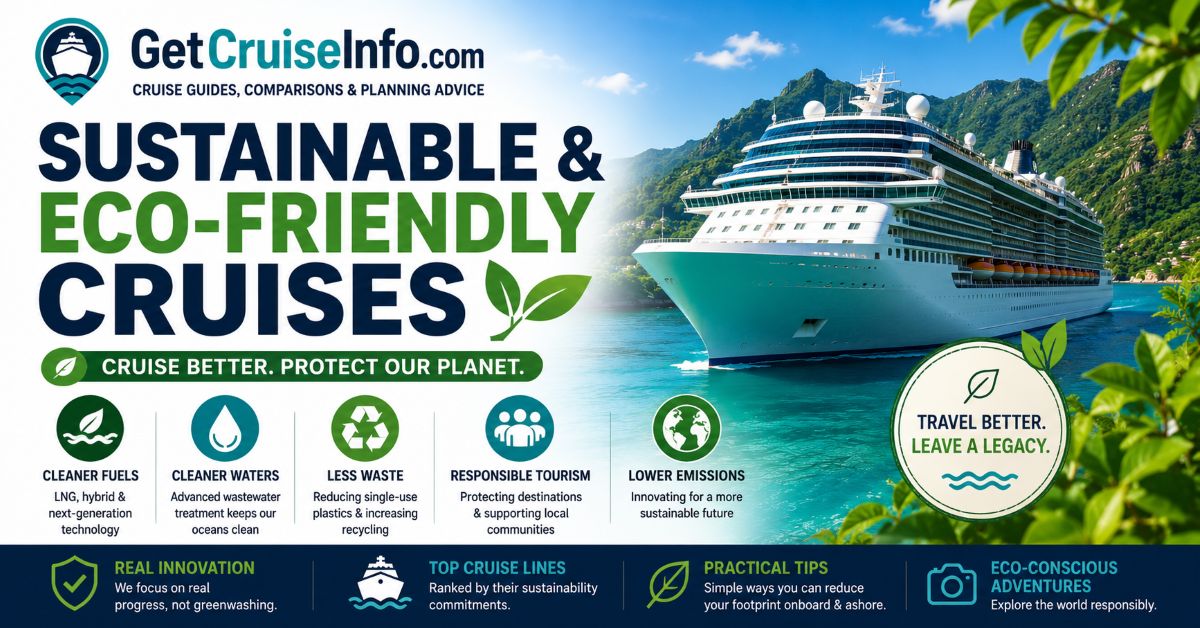
Sustainable & Eco-Friendly Cruises
Modern cruise lines are investing heavily in cleaner fuel systems, reduced emissions, wastewater technology, and responsible tourism initiatives. Here’s how sustainable cruising is evolving — and what travelers should realistically expect.
The Push Toward Sustainable Cruising
Sustainability has become one of the fastest-growing focus areas in the cruise industry.
Modern cruise lines are investing billions into:
- Cleaner fuel systems
- Advanced wastewater treatment
- Energy-efficient ship design
- Reduced single-use plastics
- Responsible tourism initiatives
At the same time, many travelers remain skeptical about environmental marketing claims and “greenwashing.”
Understanding what cruise lines are actually doing — and where limitations still exist — is important when evaluating eco-friendly cruise options.
Travelers still comparing cruise styles and planning priorities should also review:
Why Sustainability Matters in Cruising
Cruise ships operate as floating cities.
That means environmental impact includes:
- Fuel consumption
- Waste management
- Water treatment
- Food sourcing
- Tourism pressure on destinations
Cruise lines are under increasing pressure from:
- Governments
- Environmental organizations
- Port authorities
- Travelers demanding cleaner operations
Major Sustainability Technologies Used on Modern Cruise Ships
LNG (Liquefied Natural Gas)
LNG-powered cruise ships reduce sulfur emissions dramatically and lower carbon output compared to traditional marine fuel.
Many of the newest ships from:
- MSC Cruises
- Royal Caribbean
- Carnival Corporation brands
now utilize LNG propulsion systems.
Advanced Wastewater Treatment
Modern wastewater systems process and purify water before discharge, often exceeding some land-based municipal standards.
Energy-Efficient Ship Design
Newer ships incorporate:
- Improved hull design
- Air lubrication systems
- LED lighting
- Smart climate systems
to reduce fuel consumption.
Cruise Lines Investing Most Heavily in Sustainability
| Cruise Line | Primary Sustainability Focus | Notable Initiatives |
|---|---|---|
| Hurtigruten | Hybrid-Electric Technology | Battery-powered expedition support |
| MSC Cruises | LNG Fleet Expansion | World Class LNG ships |
| Royal Caribbean | Destination Net Zero | Waste-to-energy systems |
| Celebrity Cruises | Energy Efficiency | Reduced plastic initiatives |
| Norwegian Cruise Line | Waste Reduction | Single-use plastic reduction |
Travelers comparing cruise line atmosphere and onboard experience should also review:
The Reality of “Greenwashing” in Cruising
Not every sustainability claim reflects major environmental change.
Some cruise marketing campaigns focus heavily on:
- Paper straws
- Reusable containers
- Guest recycling messaging
while larger operational emissions remain substantial.
Travelers should evaluate:
- Fleet modernization investments
- Fuel transition strategies
- Public sustainability reporting
- Long-term environmental goals
rather than relying only on marketing language.
Responsible Shore Excursions Matter Too
Sustainable cruising extends beyond the ship itself.
Travelers can reduce tourism impact by choosing:
- Locally operated excursions
- Wildlife-safe tours
- Smaller group excursions
- Eco-certified tour providers
Budget-conscious travelers should also review:
How Travelers Can Reduce Their Own Cruise Footprint
- Use reusable water bottles
- Avoid excessive towel and linen replacement
- Choose digital schedules instead of paper copies
- Book responsible excursions
- Use reef-safe sunscreen
- Minimize food waste at buffets
Packing efficiently also helps reduce unnecessary travel waste.
Review:
Some Cruise Destinations Face Greater Environmental Pressure
Popular cruise destinations sometimes struggle with:
- Overtourism
- Marine ecosystem strain
- Port congestion
- Local infrastructure pressure
Regions currently focusing heavily on sustainable tourism policies include:
- Alaska
- Mediterranean ports
- Norwegian fjords
- Galápagos itineraries
Explore:
Why Expedition Cruises Lead in Sustainable Travel
Expedition cruises to the Arctic and Antarctica are built around conservation, education, and responsible exploration. Unlike traditional cruises, these voyages typically operate with far fewer guests and follow strict environmental protocols designed to protect some of the world's most fragile ecosystems.
In Antarctica, operators follow IAATO guidelines that regulate wildlife interactions, biosecurity procedures, and the number of passengers permitted ashore at one time. Arctic expedition operators similarly emphasize Leave No Trace principles, small-group excursions, and expert-led interpretation by naturalists, historians, and scientists.
If sustainable travel is one of your priorities, these guides provide a deeper look at expedition cruising:
The Future of Sustainable Cruising
The cruise industry is currently exploring:
- Hydrogen fuel technology
- Battery-assisted propulsion
- Shore power integration
- Carbon-neutral fuel alternatives
- Smarter energy management systems
While fully carbon-neutral cruising is still developing, modern ships are becoming substantially cleaner than older fleets.
Final Thoughts
Sustainable cruising is improving, but it is still evolving.
The most eco-friendly cruise choice often comes down to:
- Choosing newer ships
- Supporting responsible operators
- Reducing unnecessary waste
- Making smarter destination decisions
Travelers should remain realistic: no large-scale cruise operation is completely impact-free.
However, the industry is investing heavily in cleaner technology and operational improvements that are changing how cruising works long term.
Frequently Asked Questions
What is the most eco-friendly cruise line?
Hurtigruten is often viewed as one of the strongest sustainability-focused cruise operators because of hybrid-electric expedition technology and reduced-emission initiatives.
Are LNG cruise ships better for the environment?
Yes. LNG reduces sulfur emissions and lowers certain greenhouse gas emissions compared to traditional marine fuel, although it is still considered a transition fuel rather than a perfect solution.
Do sustainable cruises cost more?
Not always. Many newer energy-efficient ships remain competitively priced against older fleets.
Are expedition cruises more environmentally friendly?
Expedition cruises generally operate with fewer passengers and follow strict environmental rules, particularly in Antarctica, where landings are governed by internationally recognized conservation standards. While no cruise is impact-free, expedition operators are often leaders in responsible tourism.
Can cruises become carbon neutral?
The industry is actively exploring hydrogen, battery support systems, and carbon-neutral fuel technologies, but fully carbon-neutral cruising is still developing.
How can travelers cruise more responsibly?
Travelers can reduce waste, support responsible excursions, use reusable products, and choose cruise lines investing in cleaner technology.
Request Cruise Options
Get Cruise Info & Personalized Cruise Matches.Tell us when you want to travel, where you'd like to go, and what matters most to you. We'll help identify cruise options that fit your dates, budget, travel style, and cabin preferences. Not sure which cruise line, ship, or itinerary you want? That's completely fine — many travelers start with nothing more than available vacation dates, a departure port, or a general idea of where they'd like to go.
Only know your available dates? That's enough to get started. You can also review our Find a Cruise by Date Guide to see how we narrow cruise options around a fixed vacation window.