
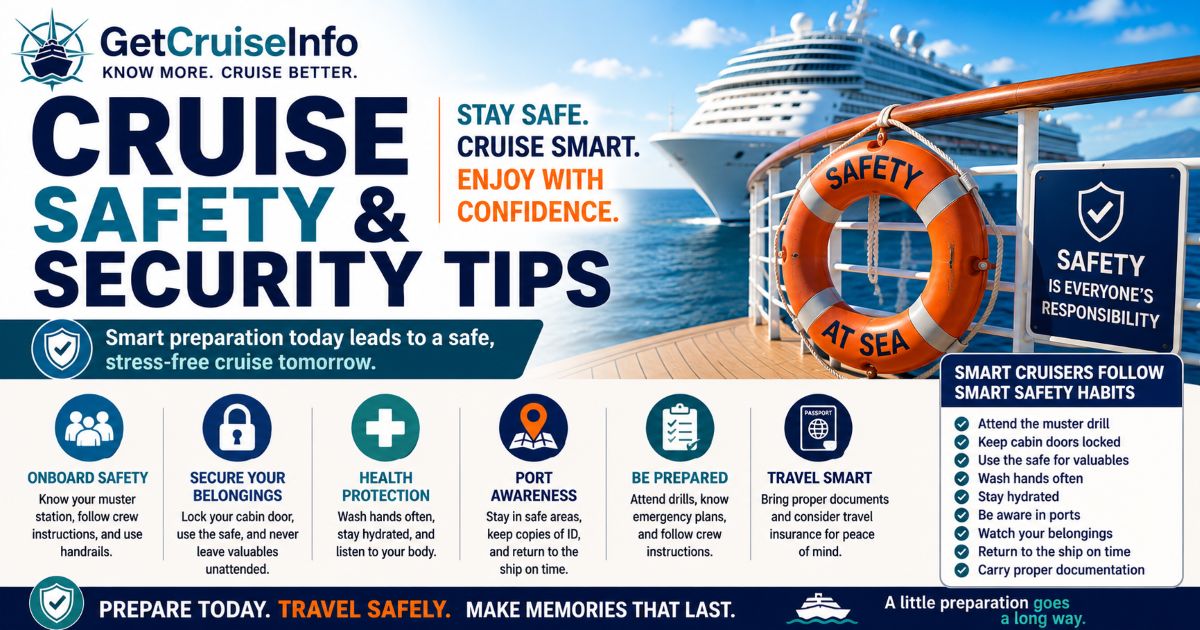
Cruising Is Generally Very Safe — But Smart Preparation Still Matters
Learn practical cruise safety strategies covering onboard security, port awareness, travel documents, health preparation, scam prevention, and the most common cruise safety mistakes travelers make.
Cruising Remains One of the Safest Forms of Vacation Travel
Modern cruise ships operate under:
- strict international safety regulations
- maritime oversight
- security monitoring systems
- trained emergency procedures
For most travelers, cruising is statistically safer than many traditional land vacations.
However, many cruise safety issues still result from:
- poor preparation
- travel fatigue
- port awareness mistakes
- overconfidence
- documentation problems
Cruise safety is usually less about fear and more about smart travel habits.
Preparation also means knowing what to do when an unexpected problem actually occurs. Our Cruise Problems Guide covers missed departures, medical problems, lost travel documents, port and excursion disruptions, lost luggage, itinerary changes, and other situations that can affect a cruise.
Wondering whether certain cruises tend to be louder or more party-oriented? Our rowdy cruises guide explains how cruise length, itineraries, and demographics can affect onboard atmosphere.
Onboard Safety Starts With Basic Awareness
Most onboard cruise safety issues involve:
- slip-and-fall accidents
- pool deck injuries
- stairway accidents
- overexertion
- motion-related balance issues
Experienced cruisers usually:
- use handrails
- avoid running on wet decks
- monitor alcohol consumption
- respect weather conditions
Helpful resource: Cruise Motion Sickness Guide
The Muster Drill Is More Important Than Many Travelers Realize
Cruise safety drills are designed to ensure travelers understand:
- emergency procedures
- assembly station locations
- life jacket protocols
- crew instructions
Many experienced cruisers recommend:
- taking the drill seriously
- learning nearby stairways
- understanding cabin evacuation routes
Fortunately, actual major cruise emergencies remain extremely rare.
Cabin Security Usually Comes Down to Simple Habits
Cruise cabins are generally very secure, but travelers still benefit from:
- locking cabin doors
- using cabin safes
- avoiding unattended valuables
- monitoring balcony access
Most cruise theft concerns involve:
- unattended items
- pool deck belongings
- careless handling of valuables
Helpful resource: Cruise Cabin Hacks Guide
Health Preparation Matters More Than Many Travelers Expect
Cruise vacations often combine:
- heat exposure
- walking
- buffets
- crowded public areas
- travel fatigue
Travelers generally improve cruise comfort and safety by:
- staying hydrated
- washing hands frequently
- managing alcohol consumption
- monitoring sun exposure
Helpful resources:
Most Cruise Port Safety Issues Involve Awareness — Not Dangerous Destinations
Most cruise ports are heavily tourism-driven and generally safe for travelers.
However, common cruise port risks still include:
- pickpocketing
- tourist scams
- transportation confusion
- missed all-aboard times
Travelers generally reduce risk by:
- staying in busy public areas
- carrying limited valuables
- maintaining return-time buffers
- understanding local transportation
Helpful resources:
Travel Documentation Mistakes Cause More Cruise Problems Than Many Travelers Expect
Cruise lines operate under strict boarding requirements involving:
- passports
- citizenship verification
- boarding documentation
- identification requirements
Common issues include:
- expired passports
- incorrect names
- missing documentation
- misunderstanding cruise ID rules
Helpful resources:
Travel Insurance Is Primarily About Financial Protection — Not Fear
Many travelers incorrectly assume cruise insurance exists mainly for:
- catastrophic emergencies
In reality, many claims involve:
- medical issues
- trip interruptions
- flight delays
- weather disruptions
- unexpected cancellations
Insurance becomes especially important for:
- international cruises
- expensive itineraries
- older travelers
- complex flight connections
Helpful resource: Cruise Travel Insurance Guide
Many Cruise Safety Fears Are Driven More by Viral Stories Than Realistic Risk
Cruise media coverage often amplifies:
- rare incidents
- extreme weather
- unusual emergencies
while ignoring:
- millions of normal sailings
- strong cruise safety records
- strict maritime oversight
Cruise safety concerns are often best evaluated through:
- practical preparation
- realistic awareness
- experience-based planning
Helpful resource: Cruise Line Myths Guide
The Safest Cruise Travelers Are Usually the Most Prepared Travelers
Cruise safety usually comes down less to:
- fear
- constant worry
and more to:
- smart preparation
- basic awareness
- good travel habits
- realistic expectations
With preparation, cruising remains one of the safest and most enjoyable ways to travel internationally.
Frequently Asked Questions
Are cruises safe?
Yes. Modern cruise ships follow strict international safety regulations and maintain extensive onboard safety procedures.
What is the biggest cruise safety issue?
Most cruise safety concerns involve slips, falls, dehydration, travel fatigue, and port awareness mistakes rather than major emergencies.
Should travelers buy cruise travel insurance?
Insurance is often recommended for international cruises, expensive itineraries, and travelers with complex flight arrangements.
How can travelers stay safe in cruise ports?
Staying aware in crowded areas, carrying limited valuables, and maintaining return-time buffers are usually the most effective strategies.
Are cruise ships medically prepared for emergencies?
Most major cruise ships maintain onboard medical facilities and trained medical personnel for common health situations and emergencies.
Some links may be affiliate links.
Request Cruise Options
Get Cruise Info & Personalized Cruise Matches.Tell us when you want to travel, where you'd like to go, and what matters most to you. We'll help identify cruise options that fit your dates, budget, travel style, and cabin preferences. Not sure which cruise line, ship, or itinerary you want? That's completely fine — many travelers start with nothing more than available vacation dates, a departure port, or a general idea of where they'd like to go.
Only know your available dates? That's enough to get started. You can also review our Find a Cruise by Date Guide to see how we narrow cruise options around a fixed vacation window.