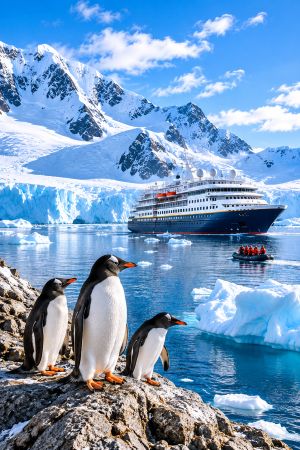
Antarctica
Explore towering glaciers, massive penguin colonies, whales, seals, Zodiac landings, and some of the most remote landscapes on Earth.
Explore the Antarctica Guide →
Explore Antarctica, the Arctic, Greenland, Svalbard, Iceland, and other remote regions with practical guidance on destinations, ships, seasons, costs, wildlife, and planning.
An expedition cruise is less like a floating resort vacation and more like a guided journey into remote natural environments. Instead of centering the trip around casinos, water slides, shopping, and large cruise terminals, expedition itineraries focus on wildlife, landscapes, small-boat landings, expert interpretation, and access to places that conventional ships cannot easily reach.
The best-known expedition regions are Antarctica and the Arctic, but the category also includes Greenland, Svalbard, Iceland, the Canadian High Arctic, Patagonia, South Georgia, the Falkland Islands, and other remote coastal areas.
This guide will help you understand:
An expedition cruise uses a smaller ship as a base for exploring remote destinations. The ship provides transportation, meals, accommodations, lectures, and equipment support, while the destination itself remains the main attraction.
Many voyages include:
Schedules are often flexible because weather, sea ice, wildlife movement, and local conditions can affect where and when the ship lands. That flexibility is part of the experience rather than a sign that the itinerary is poorly organized.
| Expedition Cruise | Traditional Cruise |
|---|---|
| Remote regions and nature-focused routes | Popular ports and established tourism centers |
| Smaller ships with fewer passengers | Medium and large ships with more passengers |
| Zodiac landings and guided exploration | Piers, terminals, and scheduled shore excursions |
| Wildlife, scenery, science, and history | Entertainment, dining, nightlife, and resort amenities |
| Plans may change with conditions | Published port schedules are usually more fixed |
| Higher average price per traveler | Wider range of budget and luxury options |
Travelers new to cruising may also want to review our Best Cruises for First-Time Cruisers guide before deciding whether an expedition voyage is the right starting point.
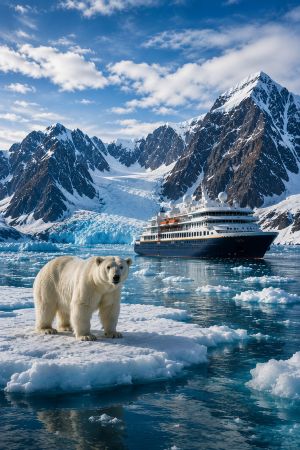
Antarctica and the Arctic are not interchangeable experiences. Antarctica is a continent surrounded by ocean and is especially well known for penguins and vast ice landscapes. The Arctic is an ocean surrounded by continents and islands, with destinations that may include inhabited communities, tundra, polar bear territory, and a wider variety of regional cultures.
The most common introduction to Antarctica, with glacier-lined channels, penguin colonies, seals, whales, and frequent Zodiac exploration.
Guide coming soonA wildlife-intensive destination known for immense king penguin colonies, dramatic mountains, historic sites, and remote beaches.
Guide coming soonWind-swept islands with seabirds, penguins, open landscapes, small settlements, and a distinctive blend of natural and cultural history.
Guide coming soonA specialized Antarctic objective associated with emperor penguin viewing and itineraries that may depend heavily on ice conditions.
Guide coming soonExplore Chilean fjords, Tierra del Fuego, Cape Horn, massive glaciers, wildlife-rich waterways, and one of the world's most spectacular expedition cruise destinations.
Explore Guide →The South Shetland Islands are often the first stop on an Antarctica expedition, offering dramatic volcanic landscapes, thriving penguin colonies, historic research stations, and unforgettable Zodiac landings just north of the Antarctic Peninsula.
Explore Guide →Towering icebergs, deep fjords, coastal settlements, tundra, and broad opportunities for landscape and cultural exploration.
Guide coming soonA high-Arctic archipelago known for glaciers, sea ice, walrus, seabirds, and the possibility of seeing polar bears in the wild.
Guide coming soonVolcanic scenery, waterfalls, fjords, seabirds, geothermal landscapes, and itineraries that may combine Iceland with Greenland or the North Atlantic.
Guide coming soonRemote islands, northern communities, wildlife, historical exploration routes, tundra, and challenging ice-influenced navigation.
Guide coming soonA historically significant Arctic route through the Canadian Arctic Archipelago, often offered as a longer and more complex expedition voyage.
Guide coming soonNorthern fjords, remote islands, fishing communities, seabirds, marine mammals, and routes extending toward Svalbard.
Guide coming soonExpedition cruise seasons are shaped by daylight, weather, sea ice, wildlife behavior, and the ability to reach remote landing sites. The best month depends on what you most want to see.
Most voyages operate during the Southern Hemisphere summer, generally from late spring through early fall in the south.
Most itineraries operate during the Northern Hemisphere summer when daylight is long and many areas become more accessible.
Penguin nesting, whale activity, polar bear movement, seabird colonies, and sea-ice conditions vary throughout the season.
Earlier or later departures may offer distinctive ice, light, and wildlife advantages, but conditions can be less predictable.
Do not choose only by price. A less expensive departure may occur during a different wildlife phase or involve different daylight and ice conditions than the trip you originally pictured.
Wildlife is one of the strongest reasons to choose expedition cruising, but sightings are never guaranteed. Animals move freely, and responsible operators do not stage encounters.
Because expedition travel centers on sensitive environments, travelers should also review our Sustainable & Eco-Friendly Cruise Guide for practical ways to reduce waste, follow wildlife rules, and choose responsible excursions.
Activities vary by operator, ship, destination, weather, and individual itinerary. Some are included in the fare, while others may require advance reservations or additional payment.
The right cruise line depends on destination expertise, ship size, included activities, comfort level, onboard atmosphere, and total trip cost. The most luxurious ship is not automatically the best expedition platform, and the most adventure-focused operator may not be the best fit for every traveler.
A polar-focused operator offering Antarctica and Arctic itineraries with expedition teams, small-boat exploration, and a strong emphasis on remote destinations.
Offers expedition-focused voyages in polar and other remote regions, combining destination education with a more contemporary shipboard experience.
Known for naturalist-led exploration, photography, education, and destination-focused voyages aboard relatively small expedition ships.
Combines expedition itineraries with a luxury-oriented onboard product, including elevated service, dining, and accommodations.
Offers premium and luxury expedition voyages with a strong presence in polar regions and other remote destinations.
Targets travelers seeking a high-end expedition experience with extensive onboard amenities and a luxury yacht-style atmosphere.
Now that you understand how expedition cruising differs from traditional cruises, the next step is comparing actual itineraries. Look beyond the destination itself and evaluate the ship, passenger capacity, expedition team, included activities, voyage length, embarkation city, and what's included in the fare.
Quark Expeditions has specialized exclusively in polar travel for more than 30 years, offering voyages throughout Antarctica, South Georgia, Greenland, Svalbard, the Canadian High Arctic, and other remote destinations.
Disclosure: As an affiliate partner, GetCruiseInfo.com may earn a commission if you book through qualifying links. This never affects the price you pay.
Expedition cruises generally cost more than mainstream cruises because the ships carry fewer passengers, operate in remote regions, require specialized crews and equipment, and often include guided landings and expedition activities.
The total price can vary dramatically based on:
A lower advertised fare is not always the lower-cost trip. Compare the full package, including transfers, flights, equipment, gratuities, hotel nights, activity charges, and insurance requirements.
Travelers watching for promotions should also review our Best Cruise Deals Guide, while recognizing that expedition pricing and promotions do not always follow the same patterns as mainstream Caribbean or Mediterranean cruises.
You do not necessarily need to be an athlete to take an expedition cruise, but you should honestly evaluate mobility, balance, stamina, and comfort with small boats. Wet landings, uneven ground, steep gangways, cold weather, and moving between the ship and a Zodiac can be challenging.
Before booking, ask:
Policies differ significantly by ship and operator. Get written confirmation of accessibility arrangements before making a nonrefundable payment.
Cabin choice matters, but it should not overshadow itinerary quality. On an expedition cruise, travelers often spend substantial time in observation lounges, on open decks, in Zodiacs, or ashore.
Important cabin considerations include:
For general cabin-selection principles, see our Best Cabin Location on a Cruise Ship guide.
Cold-weather expedition packing is built around waterproof protection, layering, comfort, and equipment management. The operator may provide some items, such as a parka or loaner boots, but inclusions vary by voyage.
Common essentials include:
Do not buy expensive specialized gear until you confirm what the cruise line supplies and what is required for your itinerary. Our Cruise Essentials Guide can help with general travel accessories, luggage organization, waterproof storage, and other practical items.
Expedition trips can involve large nonrefundable payments, remote medical care, weather disruptions, charter flights, missed connections, and expensive emergency evacuation. For that reason, insurance is more than a routine add-on.
Review:
See our full guide: Is Cruise Travel Insurance Worth It?
Start with the experience you want, not the ship brochure. A beautiful vessel cannot compensate for an itinerary that does not match your priorities.
An expedition cruise focuses on remote destinations, wildlife, guided exploration, small-boat landings, and educational programming. A regular cruise generally places more emphasis on entertainment, dining, resort amenities, and established ports.
No, but travelers should be comfortable with the physical requirements of the specific voyage. Zodiac boarding, uneven terrain, cold weather, and wet landings can be challenging, and accessibility varies by ship.
The Antarctic Peninsula is a common first Antarctic choice, while Svalbard and Greenland are popular Arctic options. The best destination depends on preferred wildlife, scenery, travel time, budget, and comfort with sea conditions.
They are generally more expensive than mainstream cruises because ships carry fewer passengers and operate with specialized crews and equipment in remote regions. Total cost depends on itinerary length, cabin, ship, flights, hotels, insurance, and included activities.
No wildlife sighting is guaranteed. Penguins are associated with Antarctic and sub-Antarctic routes, while polar bears are found in the Arctic. Season, route, weather, ice, and animal movement all affect sightings.
Yes. Captains and expedition leaders may adjust landings and routes because of weather, sea ice, wildlife, safety, or local regulations. Flexibility is a normal part of expedition travel.
Many operators require specific insurance coverage, and even when it is not mandatory, strong medical, evacuation, cancellation, and interruption coverage is highly advisable because of the cost and remoteness of these trips.
Pack in layers and prioritize waterproof outerwear, warm accessories, sun protection, secure storage, and gear appropriate for Zodiac rides and shore landings. Confirm which boots, parkas, or equipment the cruise line provides before buying specialized items.