Wildlife
Penguins, seals, whales, albatrosses, petrels, and other seabirds are major reasons travelers choose Antarctica.

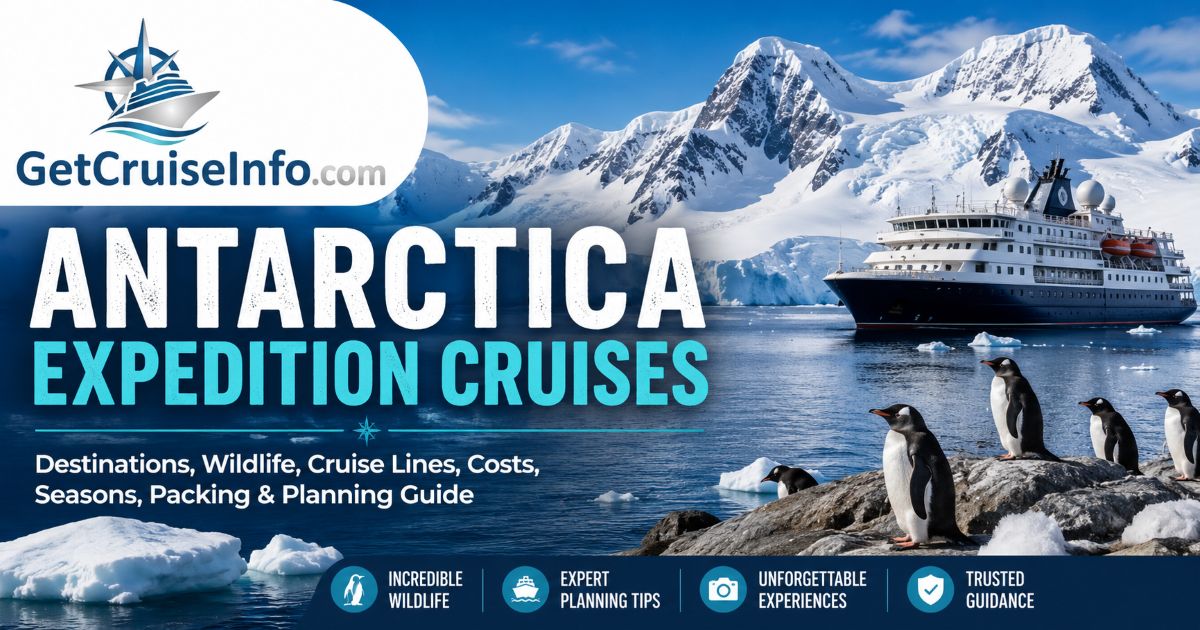
Compare Antarctica routes, wildlife seasons, expedition cruise lines, ship styles, costs, landings, and practical planning before choosing your voyage.
An Antarctica cruise is fundamentally different from a conventional cruise vacation. There are no resort ports, shopping districts, beach clubs, or fixed sightseeing schedules. The voyage is built around weather, sea ice, wildlife, Zodiac landings, and access to one of the most remote environments on Earth.
Most travelers visit aboard purpose-built expedition ships that carry specialized crews, naturalists, historians, scientists, photographers, and small landing craft. The ship is important, but the destination remains the center of the experience.
Before comparing specific departures, it helps to understand the broader category. Our Expedition Cruises Guide explains how expedition voyages differ from mainstream cruises and what to evaluate when comparing ships, operators, inclusions, and physical requirements.
This Antarctica guide will help you understand:
Travelers choose Antarctica because it offers experiences that cannot be recreated on a standard cruise itinerary. The scale of the landscape, absence of permanent cities, abundance of wildlife, and constant influence of ice and weather create a voyage that feels genuinely remote.
Penguins, seals, whales, albatrosses, petrels, and other seabirds are major reasons travelers choose Antarctica.
Glaciers, tabular icebergs, mountain-backed channels, sea ice, and shifting light dominate the visual experience.
Zodiac cruises, shore landings, guided walks, and expert interpretation make the destination more immersive than passive scenic cruising.
Antarctica remains one of the few places where the environment—not tourism infrastructure—controls the pace of the journey.
Antarctica appeals strongly to wildlife enthusiasts, photographers, experienced travelers, and people who value destination immersion more than traditional entertainment. It can also be an excellent first expedition cruise, provided the traveler understands the cost, physical requirements, variable conditions, and possibility of itinerary changes.
| Planning Question | Typical Answer |
|---|---|
| Primary cruise season | Austral summer, generally from late October through March |
| Most common embarkation point | Ushuaia, Argentina |
| Most common first route | Antarctic Peninsula and South Shetland Islands |
| Typical voyage style | Small-ship expedition cruise with Zodiac operations and guided landings |
| Major wildlife interests | Penguins, whales, seals, seabirds, and marine ecosystems |
| Main sea crossing | The Drake Passage between South America and Antarctica |
| Planning priority | Choose the route and expedition experience before choosing the cabin |
The classic Antarctica journey begins in southern South America, most often in Ushuaia. From there, ships cross the Drake Passage and reach the South Shetland Islands or Antarctic Peninsula. Longer itineraries may add South Georgia, the Falkland Islands, the Weddell Sea, or other specialized regions.
Compare the number of actual expedition days—not just the total number of nights. A longer voyage may include more transit, additional islands, charter flights, or hotel nights rather than more time on the Antarctic Peninsula.
Not every Antarctica itinerary offers the same experience. The Antarctic Peninsula is the most common starting point, while South Georgia, the Falkland Islands, Snow Hill Island, and the Weddell Sea serve more specialized interests.
The most popular introduction to Antarctica, with dramatic channels, glaciers, penguin colonies, seals, whales, and frequent Zodiac operations.
Detailed guide coming soonLocated north of the Antarctic Peninsula, these islands are frequently included early or late in a voyage and may provide landing, wildlife, and historic-site opportunities.
Detailed guide coming soonKnown for enormous king penguin colonies, elephant seals, mountainous scenery, and historic sites associated with Antarctic exploration.
Detailed guide coming soonA remote archipelago with penguins, seabirds, open landscapes, small communities, and a distinctive mix of wildlife and cultural history.
Detailed guide coming soonAn ice-influenced region east of the Antarctic Peninsula associated with dramatic tabular icebergs, remote navigation, and specialized expedition routes.
Detailed guide coming soonA highly specialized objective associated with emperor penguin expeditions and access that depends heavily on sea ice, weather, and aircraft or helicopter operations.
Detailed guide coming soonFor many first-time visitors, an Antarctic Peninsula itinerary offers the clearest introduction. It generally provides a strong mix of scenery, penguins, seals, whales, Zodiac exploration, and manageable overall trip length.
Travelers whose highest priority is sheer wildlife concentration may prefer an itinerary that includes South Georgia. Those interested in emperor penguins may investigate Snow Hill Island programs, while travelers drawn to remote ice navigation may prefer Weddell Sea routes.
| Antarctic Peninsula Voyage | Extended Voyage |
|---|---|
| Generally shorter and easier to fit into a two-week vacation | Often requires three weeks or more when South Georgia and the Falklands are included |
| Strong introduction to Antarctic scenery and wildlife | Broader range of wildlife habitats and regional experiences |
| Usually lower total trip cost | Higher fare, insurance exposure, and time commitment |
| Common choice for first-time visitors | Strong choice for dedicated wildlife travelers and experienced expedition cruisers |
| More departure options | Fewer departures and more complex logistics |
The longer itinerary is not automatically better. Choose based on your priorities, available time, wildlife interests, tolerance for sea days, and total budget.
The Antarctica cruise season generally runs during the Southern Hemisphere summer. There is no single best month for every traveler because wildlife behavior, sea ice, daylight, snow conditions, whale activity, and pricing change throughout the season.
Late October through November often brings fresh snow, dramatic ice, active courtship and nesting behavior, and a sense of arriving early in the season.
December and January usually offer long daylight, active penguin colonies, more accessible landing areas, and the broadest selection of departures.
February and March may bring stronger whale activity, larger penguin chicks, changing light, and generally more open water in some regions.
An early- or late-season discount may be worthwhile, but it may also place you in a different stage of the nesting, hatching, fledging, or whale-feeding cycle. Decide what you most want to see before choosing a departure date.
Early-season departures may feature heavier snow coverage, striking ice conditions, courtship behavior, nest building, and relatively pristine landing sites. Weather and ice can be less predictable, and access may vary.
December brings extremely long daylight and increasingly active penguin colonies. Eggs may be present in many locations, and the season is moving toward the peak summer period.
January is one of the most popular months because of long daylight, active wildlife, comparatively milder conditions, and broad itinerary availability. Penguin chicks become a major attraction in many colonies.
February often appeals to travelers focused on whales and growing penguin chicks. Some channels may become more accessible as ice conditions change, although every season is different.
Late-season voyages may offer strong whale activity, more independent penguin chicks, lower-angle light, and potentially attractive pricing. Daylight decreases, and some wildlife colonies begin to quiet.
Antarctica is a strong fit for travelers who value:
It may be a poor fit for travelers who need fixed port schedules, extensive shopping, warm weather, conventional nightlife, or guaranteed access to every planned landing.
Travelers comparing rugged scenery closer to home may also want to review our Alaska Cruise Guide. Alaska and Antarctica both emphasize wildlife and scenery, but Antarctica is far more remote, more expedition-driven, and more dependent on small-boat operations.
Trying to decide between Earth's two polar regions? Our Arctic Expedition Cruise Guide explains how Svalbard, Greenland, Iceland, and the Canadian Arctic compare with Antarctica when it comes to wildlife, scenery, expedition style, and travel logistics.
The Drake Passage is the stretch of open water between Cape Horn and the South Shetland Islands. Most traditional Antarctica expeditions sailing from Ushuaia cross it twice—once on the way south and again on the return voyage.
The passage has a dramatic reputation because strong winds, ocean currents, and rapidly changing weather can create substantial seas. Conditions vary from one departure to the next, however. Travelers sometimes experience a relatively calm crossing nicknamed the Drake Lake, while rougher conditions are commonly called the Drake Shake.
A typical crossing takes roughly two days in each direction, although speed, weather, sea conditions, and the ship's route can affect the timing. During the crossing, expedition teams usually begin lectures, wildlife observation, photography instruction, equipment briefings, and mandatory safety or biosecurity preparations.
No operator can promise calm water. Forecasting helps captains choose the safest practical timing and route, but travelers should prepare for motion. Modern expedition ships may use stabilizers, specialized hull designs, and experienced bridge teams, but no technology can eliminate all movement in open ocean.
For general preparation strategies, see our Cruise Motion Sickness Guide.
Some fly-cruise programs use aircraft between southern South America and the South Shetland Islands, reducing or avoiding the sea crossing. These programs can save time, but they may cost more and remain vulnerable to weather-related flight delays. Compare the complete logistics and contingency plans before choosing a fly-cruise itinerary.
Zodiac operations are central to most Antarctica expedition cruises. These rigid-hulled inflatable boats carry small groups between the ship, landing sites, ice formations, wildlife areas, and scenic channels where the expedition vessel cannot safely approach.
A typical Zodiac outing may involve:
During a wet landing, passengers step from the Zodiac into shallow water before walking onto shore. Waterproof boots are essential. During a dry landing, passengers step onto a dock, rock platform, or other surface without entering the water. Even dry landings may involve slippery, uneven, or moving surfaces.
Crew members normally assist passengers, but travelers should be able to follow instructions, maintain balance, step between moving surfaces, and sit securely during the ride. Conditions can be cold, wet, windy, and uneven. Accessibility differs significantly by ship and operator, so travelers with mobility limitations should obtain written guidance before booking.
Landings may be changed or canceled because of wind, swell, ice, wildlife, visibility, or safety concerns. The expedition team may substitute a Zodiac cruise, scenic navigation, another landing site, or additional onboard programming. Flexible planning is a normal part of an Antarctica voyage.
Antarctica is a highly protected environment. Expedition operators follow international agreements, national permit requirements, site-specific rules, and industry operating standards intended to reduce environmental impact. Many operators participate in the International Association of Antarctica Tour Operators, commonly known as IAATO.
Travelers should expect procedures such as:
Responsible expedition travel depends on individual behavior. Our Sustainable & Eco-Friendly Cruise Guide offers additional guidance for reducing waste, respecting wildlife, and evaluating environmental claims.
Wildlife is a major reason travelers visit Antarctica, but no specific sighting can be guaranteed. Species, colony activity, feeding behavior, and accessibility change throughout the season and vary by route.
The Antarctic Peninsula and nearby islands may provide opportunities to see several penguin species. Common interests include:
Nesting, hatching, chick growth, and fledging occur at different points in the season. A traveler focused on chicks should not choose the same timing as someone prioritizing courtship, snow-covered colonies, or late-season whale activity.
Possible sightings include humpback, minke, fin, and killer whales. Whale activity often becomes a stronger attraction later in the season as feeding increases in Antarctic waters. Sightings may occur from the ship, during Zodiac cruises, or near landing areas.
Antarctica and the Southern Ocean support several seal species, including:
South Georgia is especially notable for large concentrations of elephant seals and fur seals during parts of the season.
Albatrosses, petrels, skuas, terns, prions, and Antarctic shags may be seen throughout the voyage. The Drake Passage itself can provide excellent pelagic bird observation, particularly for travelers who spend time on open decks with the expedition team.
Never block an animal's route, pursue wildlife for a photograph, imitate calls, touch animals, or move closer than the expedition team permits. The best encounters occur when travelers remain patient and allow wildlife to behave naturally.
There is no guaranteed daily schedule because the expedition team continually evaluates conditions. A common day may include:
| Time of Day | Possible Activity |
|---|---|
| Early morning | Wake-up announcement, weather update, breakfast, and preparation for the first outing |
| Morning | Zodiac cruise, shore landing, guided walk, wildlife observation, or glacier exploration |
| Midday | Return to the ship, gear cleaning, lunch, navigation, and informal observation from deck |
| Afternoon | A second landing, Zodiac cruise, kayaking session, photography activity, or scenic passage |
| Evening | Daily recap, lecture, briefing for the next day, dinner, and continued wildlife or scenery viewing |
Long summer daylight can extend opportunities well beyond a conventional schedule. Passengers should remain prepared for announcements when wildlife, ice, or exceptional scenery appears unexpectedly.
Cruise lines differ in ship capacity, expedition style, luxury level, activity options, educational programming, inclusions, and price. The strongest choice is the operator whose itinerary and operating model match your priorities—not necessarily the company with the newest ship or largest cabin.
A polar specialist offering Peninsula, South Georgia, Falkland Islands, Snow Hill, and other Antarctica-focused itineraries with expedition teams and small-boat operations.
Offers Antarctica voyages with expedition programming, science-oriented activities, and contemporary ships designed for remote-region travel.
Known for naturalist-led exploration, photography support, educational programming, and destination-intensive expedition experiences.
Combines polar exploration with a luxury-oriented onboard product, upscale accommodations, and elevated service.
Operates premium and luxury expedition voyages with a strong polar presence and a range of ship and itinerary styles.
Targets travelers seeking an ultra-luxury expedition-yacht experience with extensive onboard amenities and selected specialty activities.
Review passenger capacity, landing procedures, expedition-team size, activity inclusions, charter flights, hotel nights, boot and parka policies, medical requirements, cancellation terms, and the number of actual expedition days.
Disclosure: GetCruiseInfo.com may earn a commission from qualifying bookings made through affiliate links. This does not increase the price paid by the traveler.
Antarctica cruises are high-cost trips because ships carry relatively few passengers, operate in remote waters, require specialized crews and equipment, and often include guided landings and expedition activities. Pricing ranges widely, and the advertised cruise fare may represent only part of the total expense.
Compare the total trip cost line by line. A more expensive fare may include flights, hotels, transfers, parkas, boots, gratuities, or activities that another operator charges separately.
Our Best Cruise Deals Guide explains general pricing strategies, although Antarctica promotions and inventory behave differently from mainstream cruise markets.
The itinerary, expedition operation, and ship capacity matter more than decorative cabin features. Still, cabin location and layout can affect comfort during the Drake Passage and the practical use of cold-weather gear.
For broader cabin-selection guidance, see our Best Cabin Location on a Cruise Ship.
Antarctica packing is based on layering, waterproof protection, and reliable equipment management. Do not assume every operator provides the same gear. Some supply parkas and loaner boots, while others have different sizing, return, or purchase policies.
Confirm the operator's supplied equipment before buying expensive specialized items. Our Cruise Essentials Guide can help with general luggage organization, waterproof storage, travel accessories, and practical cruise gear.
Antarctica travel carries substantial financial and logistical risk. A cancellation can affect a high-value fare, international flights, hotels, charter arrangements, and other nonrefundable expenses. Medical care is limited, and emergency evacuation from a remote region can be extremely expensive.
Read the policy language rather than relying only on a summary page. Keep receipts, medical records, delay notices, and written confirmation of any disruption. For a broader overview, see Is Cruise Travel Insurance Worth It?
No trip to Antarctica is impact-free. Travelers can still make better choices by comparing ship capacity, operating practices, environmental policies, waste systems, fuel claims, wildlife procedures, and the quality of onboard education.
Read our Sustainable & Eco-Friendly Cruise Guide for additional questions to ask before booking.
Continue exploring expedition cruising by comparing Antarctica with our Arctic Expedition Cruise Guide or return to the Expedition Cruises Guide to compare destinations, cruise lines, and planning resources.
Both offer exceptional expedition cruising, but they are very different experiences. Antarctica is known for penguin colonies, towering icebergs, and a largely uninhabited continent. The Arctic offers polar bears, walrus, Greenlandic communities, fjords, and tundra landscapes. Our Arctic Expedition Cruise Guide compares the regions in greater detail.
There is no single best month. November often emphasizes snow and early nesting behavior, December and January provide long daylight and active colonies, while February and March can offer stronger whale activity and larger penguin chicks.
Classic Antarctic Peninsula voyages commonly require around ten to fourteen days, while itineraries adding South Georgia and the Falkland Islands often require closer to three weeks or more when travel days are included.
Ushuaia, Argentina, is the most common embarkation point. Some programs use other South American gateways or combine flights with ship travel.
No. Conditions range from calm to very rough and cannot be guaranteed. Captains monitor forecasts and adjust operations for safety, but travelers should prepare for motion.
Some fly-cruise programs use aircraft between southern South America and the South Shetland Islands. These options reduce sea-crossing time but may cost more and can be delayed by weather.
You do not need to be an athlete, but Zodiac boarding, uneven terrain, wet landings, cold weather, and moving surfaces require balance and mobility. Requirements vary by operator and itinerary.
Penguins are a major feature of most Peninsula and sub-Antarctic itineraries, but species and colony activity vary by route and season. No wildlife encounter is guaranteed.
No. Polar bears live in the Arctic. Antarctica is known for penguins, seals, whales, seabirds, and other Southern Ocean wildlife.
Costs vary widely by route, ship, cabin, season, and included logistics. Travelers should compare the full trip price, including flights, hotels, insurance, equipment, transfers, gratuities, and optional activities.
Many operators require minimum medical and evacuation coverage. Even when insurance is not mandatory, comprehensive cancellation, interruption, medical, and evacuation protection is strongly advisable.
Use moisture-wicking base layers, insulating mid-layers, waterproof outerwear, warm accessories, and waterproof footwear appropriate for Zodiac rides and landings. Confirm what the operator provides.
Yes. Weather, sea ice, wildlife, visibility, and safety can change landing sites and daily plans. Flexibility is an essential part of expedition travel.
No. A balcony can be enjoyable, but open decks and observation lounges often provide broader viewing angles and better access to expedition staff. Itinerary and ship operations matter more.
The Antarctic Peninsula is the most common first-time route because it offers a strong mix of scenery, penguins, seals, whales, and Zodiac exploration within a comparatively manageable trip length.
The Antarctic Peninsula emphasizes ice, glaciers, and Antarctic wildlife, while South Georgia is especially famous for immense king penguin colonies, elephant seals, mountainous scenery, and exploration history.
Tell us when you want to travel, where you'd like to go, and what matters most to you. We'll help identify cruise options that fit your dates, budget, travel style, and cabin preferences. Not sure which cruise line, ship, or itinerary you want? That's completely fine — many travelers start with nothing more than available vacation dates, a departure port, or a general idea of where they'd like to go.
Only know your available dates? That's enough to get started. You can also review our Find a Cruise by Date Guide to see how we narrow cruise options around a fixed vacation window.