
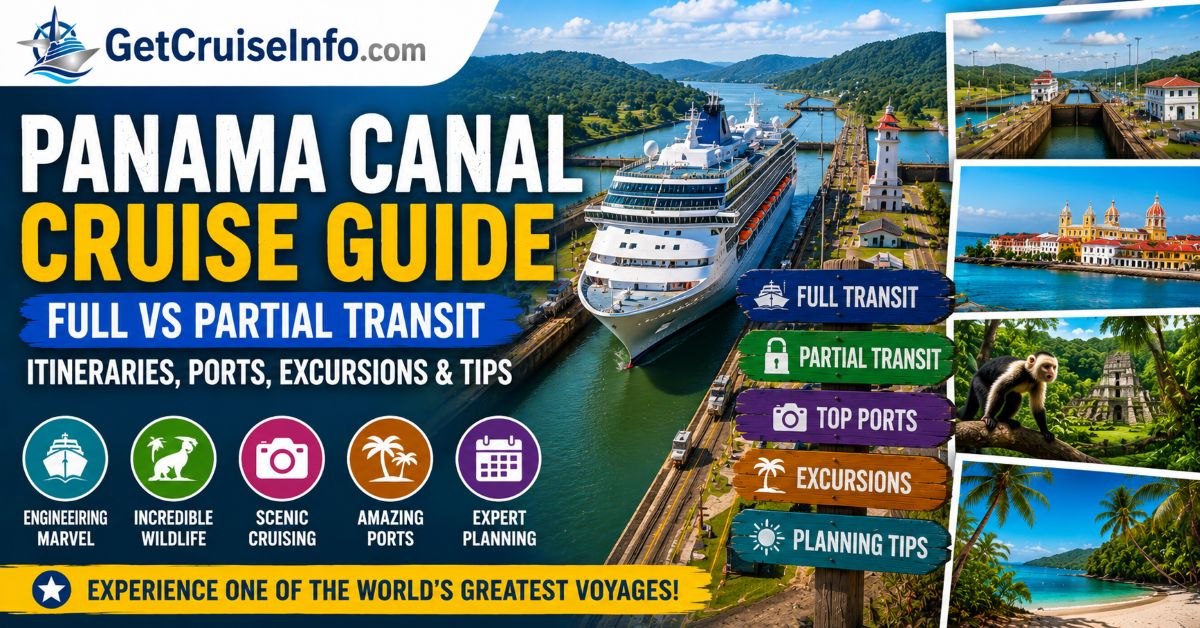
Panama Canal Cruise Guide
Learn how Panama Canal cruises work, compare full vs partial transits, explore ports and excursions, and plan one of the most unique cruise experiences in the world.
Why Take a Panama Canal Cruise?
A Panama Canal cruise remains one of the most unique cruise experiences in the world, combining engineering history, scenic cruising, tropical landscapes, wildlife, and multi-region itineraries into one unforgettable voyage.
Whether you choose a full transit or partial transit itinerary, Panama Canal cruises offer experiences very different from traditional Caribbean or Alaska sailings.
Many Panama Canal itineraries are actually repositioning cruises, where ships relocate between seasonal cruise regions while offering passengers unique one-way routes and exceptional value.
Travelers comparing warm-weather itineraries should also review our Caribbean Cruise Guide.
Full Transit vs Partial Transit
Full Panama Canal Transit
A full transit crosses the entire Panama Canal from ocean to ocean using all three major lock systems.
- Gatun Locks
- Culebra Cut
- Pedro Miguel Locks
- Miraflores Locks
Full transit itineraries often sail between Florida and California or connect Caribbean and Pacific regions.
Partial Transit Cruises
Partial transits typically enter the canal, pass through the first lock system, reach Gatun Lake, and then return without crossing the full canal.
These itineraries are often more port-focused and shorter than full transits.
For broader itinerary comparisons, review our Cruise Comparison Guide.
How the Panama Canal Works
The Panama Canal raises and lowers ships using gravity-fed freshwater lock systems.
Guests can watch ships pass through narrow lock chambers while learning about the canal’s engineering and history.
Photography-focused travelers should also review our Adventure & Zodiac Cruise Guide.
Best Cruise Lines for Panama Canal Cruises
- Princess Cruises — one of the largest Panama Canal operators
- Holland America Line — enrichment-focused itineraries
- Norwegian Cruise Line — seasonal canal sailings
- Celebrity Cruises — premium transit experiences
- Royal Caribbean — select canal itineraries
- Carnival Cruise Line — occasional canal voyages
Cruise line comparisons are available in our Cruise Comparison Guide.
Top Ports on Panama Canal Cruises
Colón, Panama
The primary Atlantic-side gateway for canal excursions and transit experiences.
Panama City
Panama City combines historic Casco Viejo, modern skyscrapers, and Miraflores Locks visitor experiences.
Costa Rica
Ports such as Limón and Puntarenas offer rainforest excursions, wildlife tours, ziplining, and eco-adventures.
Cartagena, Colombia
A major highlight for many itineraries featuring colonial architecture, fortresses, and Caribbean culture.
Aruba, Curaçao & Bonaire
Southern Caribbean ports often appear on longer Panama Canal itineraries.
For excursion inspiration, review our Caribbean Shore Excursions Guide.
Panama Canal Weather
The Panama Canal region remains tropical year-round with warm temperatures and high humidity.
- Typical highs: 85–90°F
- Rainy season: May–November
- Dry season: December–April
For broader tropical weather comparisons, review our Cruise Weather by Month Guide.
Packing Tips for a Panama Canal Cruise
- Breathable tropical clothing
- Rain jacket
- Binoculars
- Comfortable walking shoes
- Camera with zoom capability
- Sun protection
Travelers with mobility concerns should also review our Accessible Cruise Guide.
Top Excursions on Panama Canal Cruises
- Miraflores Locks visitor center
- Gatun Lake wildlife tours
- Rainforest excursions
- Canal observation tours
- Costa Rica eco-adventures
- Cartagena walking tours
Guests with dietary concerns should review our Cruise Food Allergy Guide.
Who Should Choose a Panama Canal Cruise?
Panama Canal cruises are especially popular with travelers who enjoy:
- Engineering & history
- Scenic cruising
- Wildlife & nature
- Longer itineraries
- Multi-region cruise experiences
Frequently Asked Questions
Is a Panama Canal cruise worth it?
Yes. Panama Canal cruises combine engineering history, tropical scenery, and unique transit experiences unavailable elsewhere.
What is the difference between full and partial transits?
Full transits cross the entire canal while partial transits enter the lock system and return after Gatun Lake.
Are Panama Canal cruises family friendly?
Yes, though longer full-transit itineraries may be better suited for older children and adults.
What should I pack for a Panama Canal cruise?
Breathable clothing, rain gear, binoculars, walking shoes, and sun protection are highly recommended.
How long does it take to cross the Panama Canal?
A full canal transit typically takes approximately 8–10 hours.
Planning Your Cruise Vacation?
Compare itineraries, cabin options, cruise lines, and pricing before booking.