
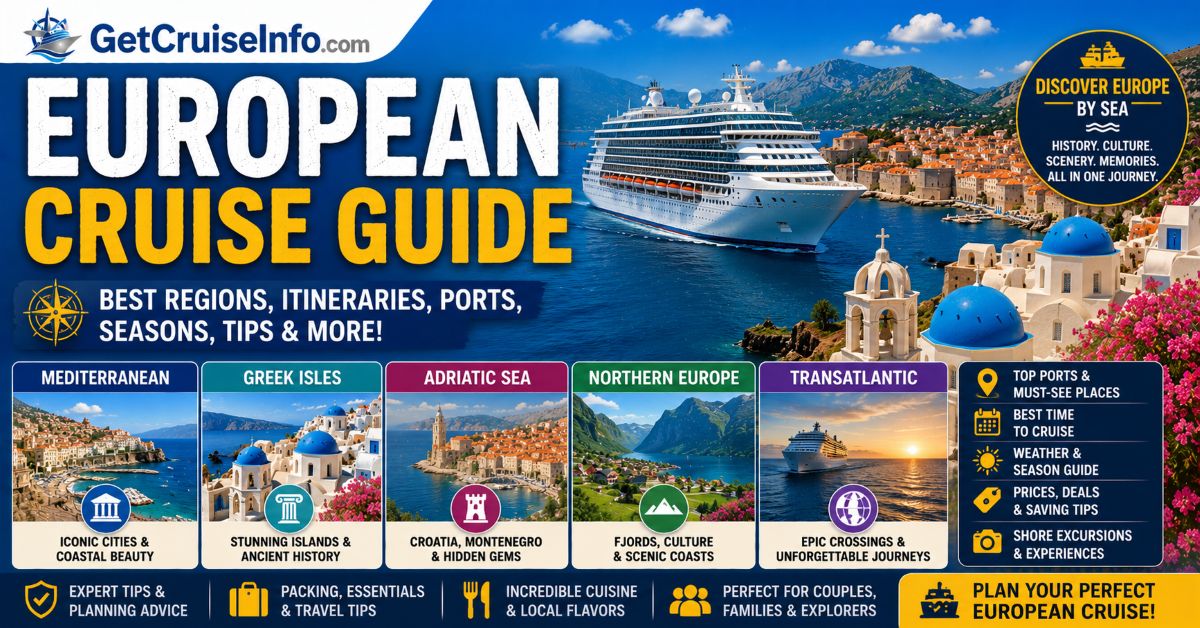
European Cruise Guide
Plan the perfect European cruise with expert advice covering Mediterranean itineraries, Greek Isles, Northern Europe, cruise ports, weather, pricing, excursions, and booking strategy.
Why Take a European Cruise?
A European cruise combines history, culture, architecture, food, scenery, and multiple countries into a single vacation experience.
Unlike beach-focused itineraries, European cruises often emphasize:
- Historic cities
- Port-intensive itineraries
- Cultural immersion
- Walking tours
- Regional cuisine
- Scenic coastal cruising
Travelers comparing ultra-long itineraries should also review our World Cruise Guide.
Main European Cruise Regions
Mediterranean Cruises
Mediterranean itineraries are the most popular European cruise option and commonly visit:
- Spain
- France
- Italy
- Greece
- Turkey
Travelers focused on Mediterranean itineraries should also review our Mediterranean Cruise Guide.
Greek Isles Cruises
Greek Isles cruises emphasize:
- Santorini
- Mykonos
- Athens
- Island scenery
- Historic ruins
Travelers comparing island itineraries should also review our Greek Isles Cruise Guide.
Adriatic Cruises
Adriatic itineraries focus heavily on:
- Croatia
- Montenegro
- Venice
- Historic coastal cities
Travelers interested in Adriatic itineraries should also review our Adriatic Cruise Guide.
Northern Europe & Baltic Cruises
Northern Europe itineraries commonly include:
- Norwegian fjords
- Copenhagen
- Stockholm
- Tallinn
- Iceland
These itineraries focus more heavily on scenery, nature, and cooler-weather cruising.
Compare the region in more detail with our Baltic Capital Ports Cruise Guide, Norwegian Fjords Cruise Guide, and Iceland Cruise Guide.
Best Time to Cruise Europe
- April–May: Cooler temperatures and lighter crowds
- June–August: Peak season and warmest weather
- September–October: Excellent balance of weather and reduced crowds
September is often considered one of the strongest overall months for European cruising.
Spring and fall are also prime seasons for repositioning cruises, as ships move between Europe, the Caribbean, and North America. These one-way voyages can offer unique itineraries and excellent value for flexible travelers. Many also include stops in the Canary Islands or the Azores as ships cross the Atlantic.
Travelers researching seasonal pricing should also review our Best Months to Book Cruises Guide.
How Much Does a European Cruise Cost?
European cruises are often more expensive than Caribbean itineraries because of:
- Longer flights
- Port-intensive routing
- Higher excursion demand
- Premium seasonal demand
Typical Pricing
- 7-night cruises: Approximately $1,200–$3,500 per person
- Luxury itineraries: $5,000+ per person
Travelers researching pricing strategy should also review our Cruise Pricing Explained Guide.
Best European Cruise Ports
Barcelona, Spain
Barcelona remains one of Europe’s top embarkation ports because of:
- Architecture
- Food
- Mediterranean access
- Strong cruise infrastructure
Rome (Civitavecchia), Italy
Rome cruises combine:
- Ancient history
- Italian cuisine
- Mediterranean itineraries
Athens, Greece
Athens serves as the gateway to Greek Isles itineraries and historic Mediterranean travel.
Dubrovnik, Croatia
Dubrovnik is one of Europe’s most scenic cruise destinations because of its:
- Medieval walls
- Adriatic scenery
- Walkable historic center
European Cruises vs Caribbean Cruises
European cruises usually involve:
- More walking
- Longer port days
- More cultural experiences
- Fewer beach-focused itineraries
Caribbean cruises often emphasize:
- Relaxation
- Beach time
- Shorter itineraries
- Simpler logistics
Travelers comparing cruise styles should also review our Caribbean Cruise Guide.
What to Pack for a European Cruise
- Comfortable walking shoes
- Lightweight layers
- Travel adapters
- Sun protection
- Day bags for excursions
- Comfortable excursion clothing
Use our Cruise Packing List before departure.
Are European Cruises Good for First-Time Cruisers?
Yes — though they can feel more physically demanding than Caribbean cruises because of:
- Longer walking distances
- Busy port schedules
- Complex excursions
- International travel logistics
First-time cruisers should also review our First-Time Cruiser Guide.
Who Should Take a European Cruise?
- History lovers
- Culture-focused travelers
- Food-focused travelers
- Experienced travelers
- Travelers seeking port-intensive itineraries
Families planning Europe itineraries should also review our Family Cruise Guide.
Frequently Asked Questions
What is the best month for a European cruise?
September is often considered one of the best months because of warm weather and lighter crowds.
Are European cruises expensive?
European cruises are often more expensive than Caribbean cruises because of airfare, excursions, and strong seasonal demand.
What is the most popular European cruise?
Mediterranean cruises remain the most popular European cruise itineraries.
Are European cruises good for first-time cruisers?
Yes, though travelers should expect more walking and more active port days than many Caribbean itineraries.
How many countries can you visit on a European cruise?
Many European cruises visit between 4–10 countries depending on itinerary length and routing.
Planning Your Cruise Vacation?
Compare itineraries, cabin options, cruise lines, and pricing before booking.