
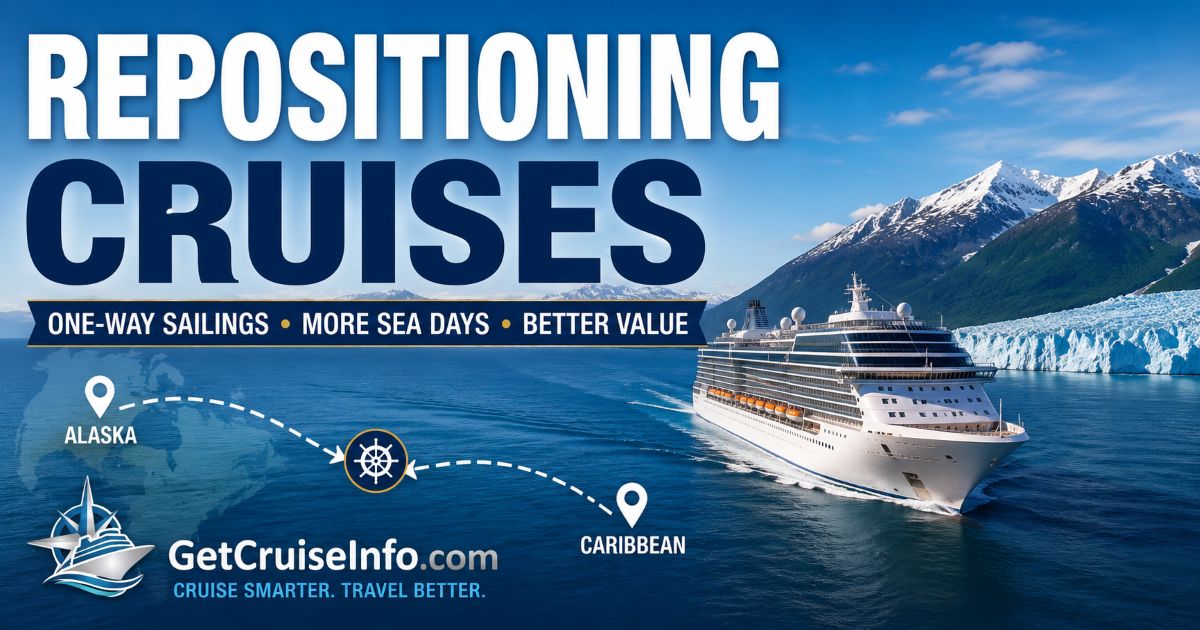
Repositioning Cruises
Discover how repositioning cruises move ships between seasonal cruise regions while offering travelers unique one-way itineraries, additional sea days, and some of the best values in cruising.
What Is a Repositioning Cruise?
A repositioning cruise occurs when a cruise ship moves from one seasonal operating region to another. Instead of sailing the same roundtrip itinerary repeatedly, the ship relocates to begin a new season elsewhere.
For example, many ships spend summers sailing Alaska itineraries before relocating south to the Caribbean for winter. Others move between Europe and North America, creating unique Transatlantic cruises along the way.
Because the ship must make the journey regardless of passenger demand, these sailings often offer excellent value compared to more traditional cruise itineraries.
Why Repositioning Cruises Are Often Cheaper
One reason experienced cruisers pay close attention to repositioning sailings is pricing.
These voyages typically include more sea days and fewer port-intensive schedules, allowing cruise lines to offer attractive fares. While pricing varies by cruise line and itinerary, many travelers find repositioning cruises deliver a lower cost per day than standard cruises.
If understanding cruise pricing feels confusing, our Cruise Pricing Guide explains how cruise fares are structured and where additional costs can appear.
Travelers seeking value may also want to review our guide to finding the best cruise deals.
Popular Repositioning Cruise Routes
Alaska to the Caribbean
One of the most common repositioning routes occurs each fall when ships leave Alaska and head toward warm-weather Caribbean deployments. These voyages often include Pacific Coast ports and extended sea days. Other seasonal repositioning cruises travel between Florida and the Northeast, making stops throughout New England and Atlantic Canada before beginning or ending their seasonal deployments. Learn more in our New England & Canada Cruise Guide.
Europe to North America
Many ships cross the Atlantic each fall after completing their European season. These European cruise repositioning voyages often become some of the most popular Transatlantic sailings of the year.
North America to Europe
During spring, many ships make the return crossing to begin another Mediterranean or Northern Europe season.
Panama Canal Repositioning Cruises
Some ships relocate between the East and West Coasts through the Panama Canal. These voyages combine repositioning value with one of the world's most fascinating engineering landmarks.
Advantages of Repositioning Cruises
- Lower fares on many sailings
- Longer itineraries
- More sea days
- Unique port combinations
- Less repetitive cruise experiences
- Opportunities to sail routes unavailable during most of the year
Travelers who enjoy relaxing onboard often find repositioning cruises particularly appealing because the experience focuses heavily on the ship itself rather than daily port visits.
If you're debating whether the ship or itinerary matters more, our guide to Cruise Ship vs Itinerary can help clarify priorities.
Potential Drawbacks
Repositioning cruises are not perfect for everyone.
- Many are one-way voyages
- Airfare may be required at one end of the trip
- Longer sailings require additional vacation time
- Extended sea days may not appeal to all travelers
- Schedules can be less convenient than roundtrip cruises
Travelers should carefully consider transportation logistics before booking, particularly when flying internationally.
Who Should Consider a Repositioning Cruise?
Repositioning cruises tend to appeal to experienced cruisers, retirees, remote workers, and travelers who enjoy spending time onboard.
They can also work well for travelers considering a back-to-back cruise or those looking to maximize value on a longer vacation.
For travelers focused primarily on visiting a specific destination, a traditional itinerary may still be the better option.
How To Find Repositioning Cruises
Most repositioning cruises occur during seasonal transitions:
- Spring: Ships moving toward Europe or Alaska, with some itineraries sailing through New England and Atlantic Canada.
- Fall: Ships moving toward the Caribbean, South America, or Australia, often featuring scenic New England & Canada sailings during peak fall foliage season.
If you're interested in these seasonal itineraries, our New England & Canada Cruise Guide explains the best sailing seasons, popular ports, and what makes these cruises unique.
Because availability can be limited and routes vary significantly from year to year, working with a cruise travel advisor can help identify opportunities that align with your schedule and budget.
Final Thoughts
Repositioning cruises offer a different style of cruising than most travelers initially imagine. Instead of focusing on frequent port stops, these voyages emphasize the journey itself.
For travelers seeking unique itineraries, more time at sea, and potentially lower daily costs, repositioning cruises may be one of the best values available in the cruise industry.
Frequently Asked Questions
What is a repositioning cruise?
A repositioning cruise occurs when a cruise ship moves from one seasonal deployment area to another, creating a one-way voyage between regions.
Why are repositioning cruises cheaper?
Many repositioning cruises include more sea days and operate on routes the ship must sail regardless of demand, often resulting in competitive pricing.
Are repositioning cruises one-way?
Most repositioning cruises are one-way sailings and require travelers to arrange transportation from a different city than where they began.
When do repositioning cruises happen?
Most occur during spring and fall as ships transition between seasonal cruise markets.
Are repositioning cruises good for first-time cruisers?
They can be, but travelers should be comfortable with multiple sea days and longer itineraries.
Do repositioning cruises include airfare?
In most cases airfare is not included unless specifically purchased as part of a cruise package.
What are the disadvantages of repositioning cruises?
One-way logistics, airfare requirements, and additional sea days may not appeal to every traveler.
What is the best repositioning cruise route?
Many experienced cruisers favor Transatlantic and Panama Canal repositioning voyages because of their length, value, and unique itineraries.