
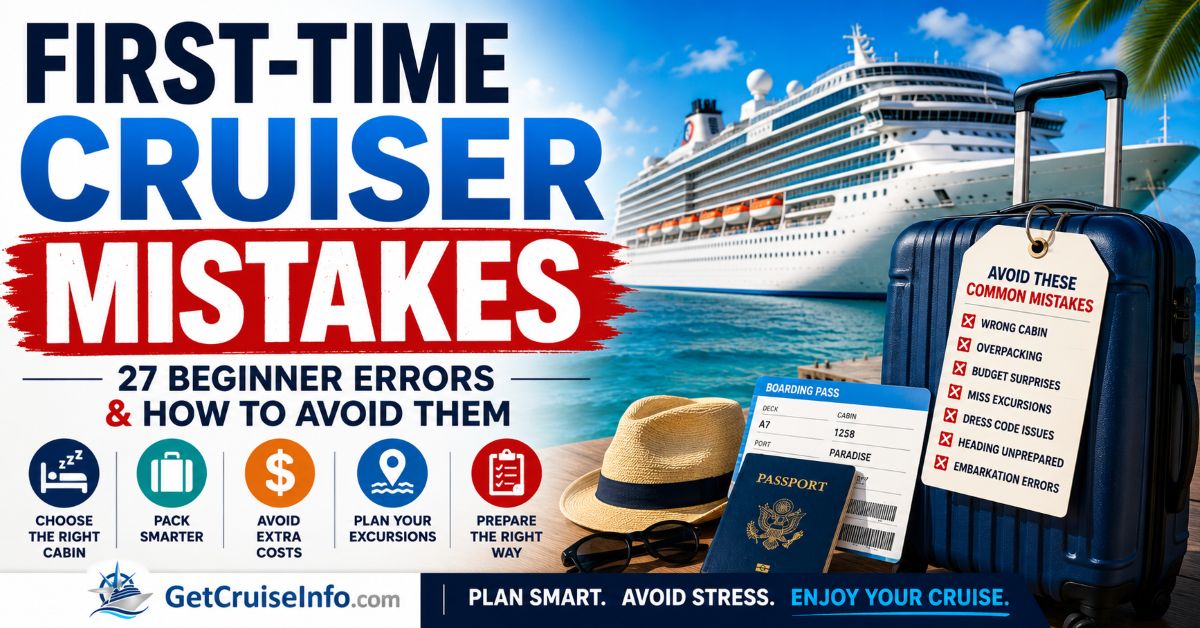
First-Time Cruiser Mistakes: 27 Beginner Errors & How to Avoid Them
Learn the most common mistakes first-time cruisers make — including cabin selection, cruise line choice, packing, budgeting, embarkation, dining, excursions, motion sickness, and onboard planning.
Why First-Time Cruisers Make the Same Mistakes
Cruising is one of the easiest vacation styles to plan, but many first-time cruisers still make avoidable mistakes that create unnecessary stress, wasted money, or disappointing experiences.
Most beginner cruise mistakes happen before the cruise even starts:
- Choosing the wrong cruise line
- Booking the wrong cabin location
- Underestimating onboard costs
- Packing incorrectly
- Misunderstanding what is included
The good news: most first-time cruise problems are easy to avoid with proper preparation.
Of course, even good preparation cannot prevent every problem. Flights get delayed, documents get misplaced, people get sick, ports are cancelled, and travelers occasionally miss the ship. Our Cruise Problems Guide explains what can happen when something goes wrong and the practical steps you can take next.
For a broader planning overview, review our Cruise Planning Guide, Cruise Essentials Guide, and First-Time Cruise Tips.
Pre-Cruise Planning Mistakes
1. Booking the Wrong Destination
Different cruise destinations create completely different travel experiences.
Beach-focused travelers often prefer:
Adventure and scenery-focused travelers may prefer:
2. Choosing a Cruise Line Based Only on Price
Cruise lines have dramatically different atmospheres, demographics, dining styles, and onboard experiences.
A cheaper cruise is not always the better cruise.
In fact, choosing a cruise that does not fit the way you like to travel can leave you thinking you hate cruising when the real problem was the ship, cruise line, itinerary, or overall experience. Before booking based on price alone, see Why Do Some People Hate Cruises? for the difference between being a poor fit for cruising and simply choosing the wrong cruise.
Compare cruise lines using:
3. Booking the Wrong Cabin Type
Many first-time cruisers book the cheapest cabin available without considering comfort, space, motion, or itinerary type.
Balcony cabins are often worth considering, especially for scenic itineraries and longer sailings.
Review:
4. Choosing a Bad Cabin Location
Cabins near elevators, pool decks, nightclubs, or noisy public venues can negatively impact sleep and comfort.
Use: Cruise Ship Deck Plans before selecting a cabin.
5. Ignoring Motion Sickness Preparation
Even travelers who rarely experience motion sickness can feel discomfort during rough seas.
Preparation matters.
Review: Cruise Motion Sickness Guide
6. Forgetting Important Travel Documents
Documentation rules vary based on itinerary and cruise line.
Review:
7. Underestimating Onboard Spending
Cruise fare usually does not include everything.
Extra costs may include:
- Drink packages
- WiFi
- Excursions
- Specialty dining
- Gratuities
Helpful resources:
8. Packing Incorrectly
Many first-time cruisers either overpack or forget important essentials.
Helpful resources:
- Complete Cruise Packing List
- Cruise Carry-On Packing List
- Cruise Packing Mistakes
- Alaska Cruise Packing List
If you're sailing to Alaska, don't rely on a general packing checklist alone. Weather, glacier viewing, and shore excursions require a different approach to clothing, footwear, and rain gear. Our Alaska Cruise Packing List includes month-by-month recommendations, excursion-specific packing advice, glacier-viewing tips, and a printable checklist to help you pack with confidence.
Embarkation Day Mistakes
9. Arriving Too Early or Too Late
Cruise terminals use boarding windows for efficiency. Ignoring assigned times can create unnecessary stress and delays.
10. Packing Important Items in Checked Bags
Medication, travel documents, electronics, and valuables should always remain in your carry-on bag.
11. Skipping Online Check-In
Online check-in speeds up boarding and helps confirm travel documentation before arrival.
12. Not Exploring the Ship on Day One
Many first-time cruisers lose valuable time later because they never learn the ship layout early.
Use: Deck Plans Guide
Dining & Food Mistakes
13. Assuming the Main Dining Room Is Your Only Option
Most cruise ships offer multiple complimentary dining venues beyond the main dining room.
Review: Cruise Dining Guide
14. Misunderstanding Drink Packages
Drink packages are valuable for some travelers but unnecessary for others.
Review: Drink Package Guide
15. Not Communicating Food Allergies
Cruise dining staff can usually accommodate allergies when notified early.
Review: Cruise Food Allergy Guide
Cabin & Onboard Mistakes
16. Ignoring Ship Announcements
Announcements often contain important information regarding:
- Port timing
- Weather changes
- Safety instructions
- Activity updates
17. Refusing to Use the Stairs
Elevators become extremely crowded during peak periods. Using stairs often saves time.
18. Not Bringing Cabin Organization Items
Packing cubes, magnetic hooks, and compact organizers help cruise cabins feel more manageable.
Review: Cruise Cabin Hacks
19. Overusing Cabin Air Conditioning
Cruise dining rooms and theaters can feel surprisingly cold. Light layers are useful even on warm itineraries.
20. Not Understanding What Is Included
Many onboard activities, dining venues, and entertainment options are already included in cruise fare.
Review: Cruise Ideas & Inspiration
Shore Excursion Mistakes
21. Waiting Too Long to Book Excursions
Popular excursions can sell out well before sailing.
Review: Excursion Planning Guide
22. Ignoring Weather & Seasonal Conditions
Cruise weather changes significantly by destination and month.
Review: Caribbean Weather by Month
23. Overbooking Port Days
Many first-time cruisers underestimate how exhausting back-to-back excursions can become.
24. Ignoring Safety Briefings
Adventure excursions require extra caution, especially water activities and rugged excursions.
Review: Zodiac Excursion Guide
Disembarkation Mistakes
25. Not Understanding Self-Assist vs Checked Luggage
Self-assist allows travelers to leave earlier if they carry their own luggage off the ship.
26. Booking Flights Too Early
Flights before noon can create unnecessary risk due to customs delays, weather, or port timing changes.
27. Forgetting to Review the Final Onboard Bill
Review onboard charges before the final morning to avoid long guest services lines during disembarkation.
Frequently Asked Questions
Is cruising easy for first-time travelers?
Yes, but first-time cruisers often make avoidable mistakes that become much easier to prevent with preparation.
Should first-time cruisers book balcony cabins?
Balcony cabins are often worth considering, especially for scenic itineraries and longer sailings.
What is the biggest first-time cruiser mistake?
Choosing a cruise based only on price without understanding the cruise line or itinerary experience.
Is motion sickness common on cruises?
Motion sickness can happen even on large cruise ships, especially during rough weather or open-water crossings.
Do first-time cruisers need passports?
Some itineraries require passports while others may allow alternative identification. Always verify cruise line requirements before departure.
Request Cruise Options
Get Cruise Info & Personalized Cruise Matches.Tell us when you want to travel, where you'd like to go, and what matters most to you. We'll help identify cruise options that fit your dates, budget, travel style, and cabin preferences. Not sure which cruise line, ship, or itinerary you want? That's completely fine — many travelers start with nothing more than available vacation dates, a departure port, or a general idea of where they'd like to go.
Only know your available dates? That's enough to get started. You can also review our Find a Cruise by Date Guide to see how we narrow cruise options around a fixed vacation window.